
Mastering the knowledge in the Car Cover Materials 101 handbook to distinguish between basic Polyester materials and advanced composite materials is the key to helping you choose a perfect US car cover, optimally protecting the value of your vehicle. Why Car Cover Material Determines the Fate of Your Vehicle? You have just purchased a brand new Ford F-150 with a brilliant metallic paint finish, or perhaps you own a priceless treasure like a Classic American Car in your garage, a symbol of pride and nostalgia. Regardless of the vehicle type, the feeling of seeing glossy paint fade over the years or the appearance of irrational swirl marks is always a heart-wrenching pain for any car owner.
In the United States, where weather can shift from the scorching heat of the Arizona desert to harsh blizzards in New York within just a few months, your car is struggling against Mother Nature every single minute. Most people know they need a car cover, but very few truly understand the differences between fabric types. A cheap, low quality cover not only fails to protect the car but can also be an accomplice to rust and fine scratches. In this in-depth Car Cover Materials 101 analysis, we will explore the world of materials from the popular Polyester line to complex composite lines so that you can make the smartest decision for your companion.
Related Articles: Waterproof vs. Water-Resistant: What Your Car Actually Needs
What actually happens when you leave your car without a cover?
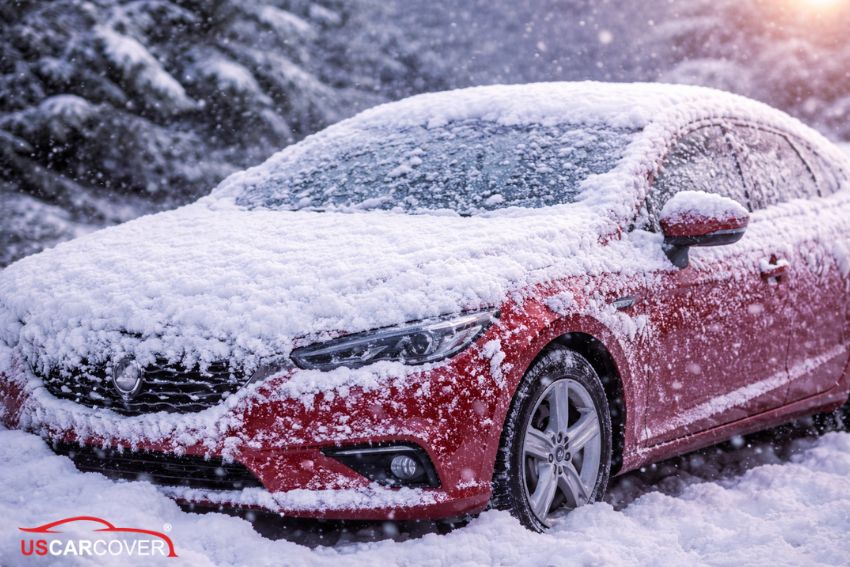
Many car owners have a subjective mindset, believing that the original factory paint is durable enough to face everything. However, from a professional automotive maintenance perspective, not using a car cover is like going out in intense sunlight or a rainstorm without protective clothing. These damages often occur silently but leave behind extremely costly consequences.
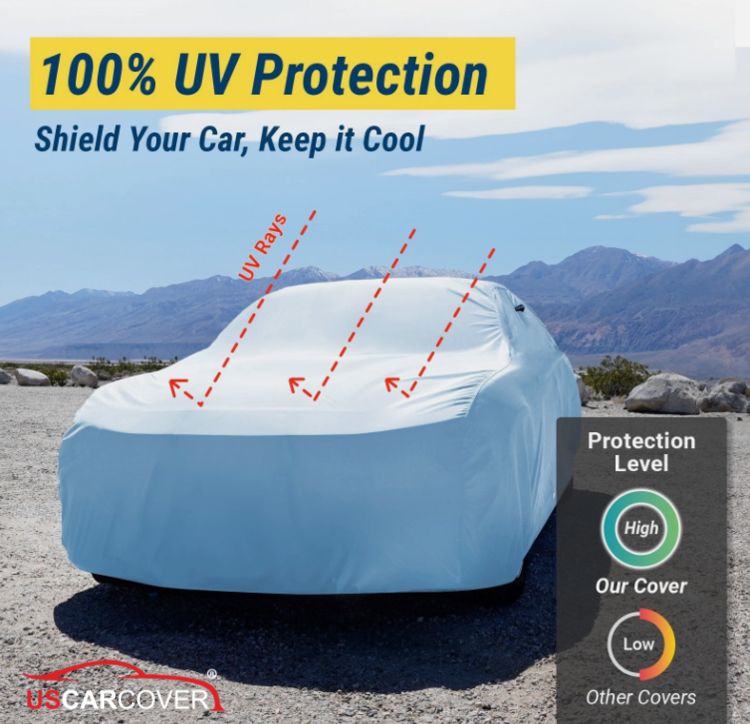
The destruction of Ultraviolet (UV) rays: The transparent assassin. Sunlight in the US does not just cause heat; it carries devastating UV rays. Without UV radiation protection, the clear coat safety layer will oxidize, leading to fading, brittleness, and peeling in patches. UV rays break the molecular bonds in the paint, causing your Chevy Silverado to lose its shine after just one summer. Not only the exterior, but the interior of the car will also be seriously affected: the plastic dashboard cracks, and leather seats become dry, hard, and lose their elasticity. The final result is a serious decrease in car resale value, which could cost you thousands of dollars when you want to resell the vehicle.
Acid rain and chemical agents from the atmosphere. In industrial states or urban areas, rainwater carries high concentrations of acid and sulfuric compounds. Without acid rain defense, water droplets remaining on the car after evaporation will leave water spots that eat deep into the paint surface and cannot be removed by regular car washing. Additionally, bird droppings and tree sap contain extremely strong organic enzymes that can eat through the paint protection layer in just a few hours if exposed to sunlight and heat. A car cover acting as bird droppings protection will help you avoid expensive repainting costs at maintenance centers.
Fine dust and the nightmare of swirl marks. Even when parked in a garage, fine dust constantly accumulates. These microscopic sand particles have very high hardness. When you wipe the car with a cloth or accidentally brush your hand across this dust layer, they act like sandpaper particles, creating spider-web shaped swirl marks. Using a non-standard car cover that lacks a soft micro-fleece lining will make this situation worse due to the friction between the cover and the paint when the wind blows.
Related Articles: Top 5 Best Indoor Car Covers to Keep Your Garage Queen Pristine
Car Cover Materials 101: Detailed analysis of the most popular materials today
To choose the best car covers, you need to understand the DNA of each fabric. Each type of material has its own advantages and disadvantages, suitable for specific environments.
Polyester fabric: The backbone of the car cover industry
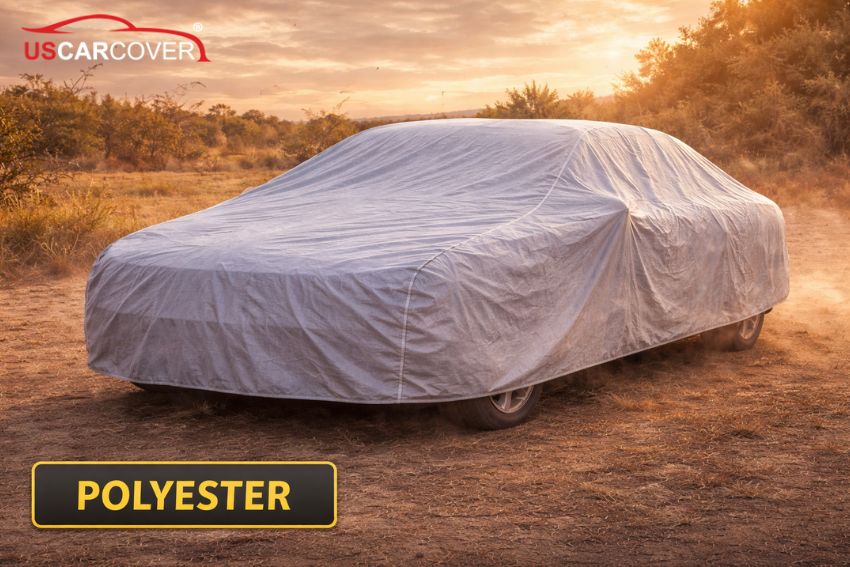
In the world of car covers, Polyester is the most trusted material thanks to its excellent balance between cost, durability, and protection performance.
Physical properties: Polyester is a synthetic fiber that is wrinkle-resistant, shrink-resistant, and extremely quick-drying. In particular, high-density woven Polyester fabric has a sustainable structure that does not rot even when exposed to high humidity for long periods.
Outstanding advantages: This fabric has very good natural UV reflection capabilities. It is very light, making the process of putting on and taking off the cover on large vehicles like the Toyota Tundra or Dodge Ram simple and effortless.
Protective effect: Polyester acts as an effective physical barrier against dirt and light liquids. This is the most important foundation for modern outdoor car covers.
Polypropylene fabric: The specialist in breathability
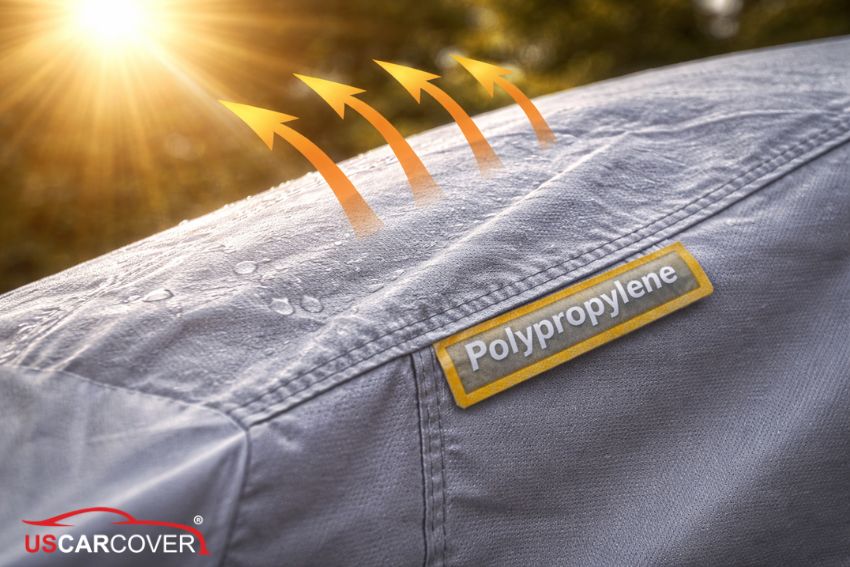
Polypropylene often appears in the form of non-woven fabric. The characteristic feature of this material is its porous structure with millions of microscopic holes.
Breathable fabric: This is the greatest advantage. It allows maximum air circulation, helping water vapor rising from the chassis to escape easily. If you live in a high-humidity area like Florida, Polypropylene is an indispensable component to ensure rust prevention for the metal frame.
Limitations: Original Polypropylene is usually less durable under intense sunlight than Polyester, so it is often used as a middle layer or for indoor cover lines.
Cotton and Flannel: Classic nurturing
In the past, Cotton was the top choice for indoor car covers. However, Cotton has a major drawback of absorbing moisture and being very heavy when wet. Today, Cotton is replaced by synthetic fibers that simulate the softness of silk to create high-quality micro-fleece lining layers, helping to maximally protect the clear coat safety layer.
Related Articles: The 10 Best Car Covers of 2026: A Comprehensive Review & Buying Guide
Advanced Composite Materials: The pinnacle of multi-layer protection technology
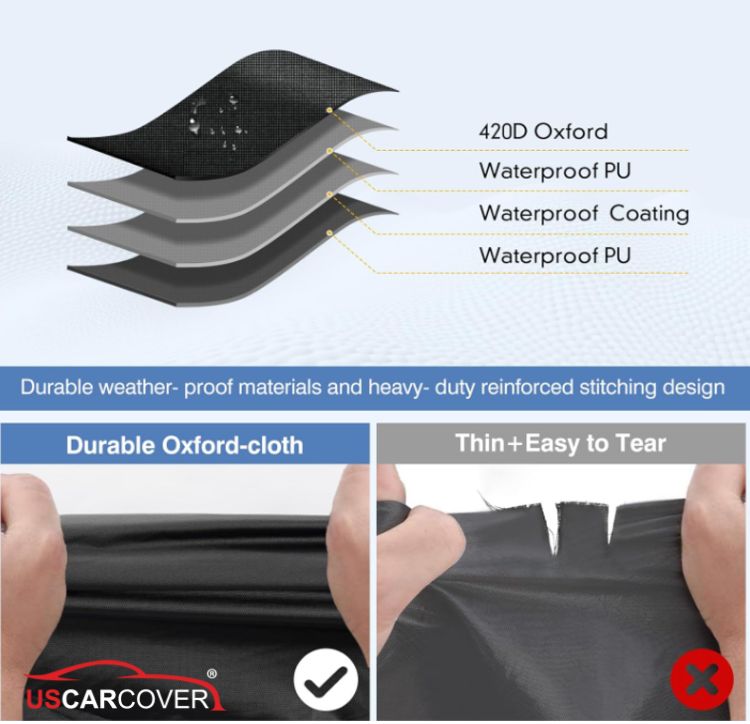
This is where US car cover technology truly makes a difference. Composite material is not just a single layer of fabric, but a complex structure of 3 to 5 different material layers heat-pressed or interwoven to achieve synergistic strength.
The 5-layer structure of the DaShield Car Cover Series. The DaShield Car Cover Series is a testament to applying composite materials to solve all car owner pains:
Shield Layer: Usually a reinforced Polyester mixture coated with Nano or Carbon-infused fibers. This layer is responsible for absolute waterproofing, reflecting 99 percent of UV rays, and withstanding large tearing forces from windstorms.
Heat Barrier: Reflects environmental temperature, keeping the engine compartment and interior cool, preventing the aging of electronic components.
Ventilation Layer: A smart microporous membrane with a structure like human skin: allowing water vapor molecules to escape but preventing raindrops from entering.
Strength Layer: Enhances tensile strength, helping the cover not to sag or lose its form after years of use.
Micro-fleece lining: A lining made of super-fine cotton fibers that directly contact the car paint. This is the final checkpoint for swirl marks prevention, ensuring the car is always as shiny as if it were just coated with Ceramic.
Detailed analysis: Why material combination is important for paint preservation
A car does not just need to be covered; it needs to breathe. If you use a completely waterproof plastic tarp (like cheap blue and orange plastic tarps), you are creating a humidity pressure cooker. Engine heat and ground moisture will be trapped, softening the paint and causing rust on electrical connectors.
The composite material from US car cover completely solves this paradox. By combining the durable properties of Polyester in the outer layer and the breathability of the middle layers, we create a perfect protective ecosystem. This is the key factor in vehicle preservation, helping Classic American Car models maintain their original beauty over decades.
Related Articles: Hail Protection for Cars: Can a Standard Cover Really Save Your Hood?
Guide to choosing a Car Cover according to needs and actual environment in the United States
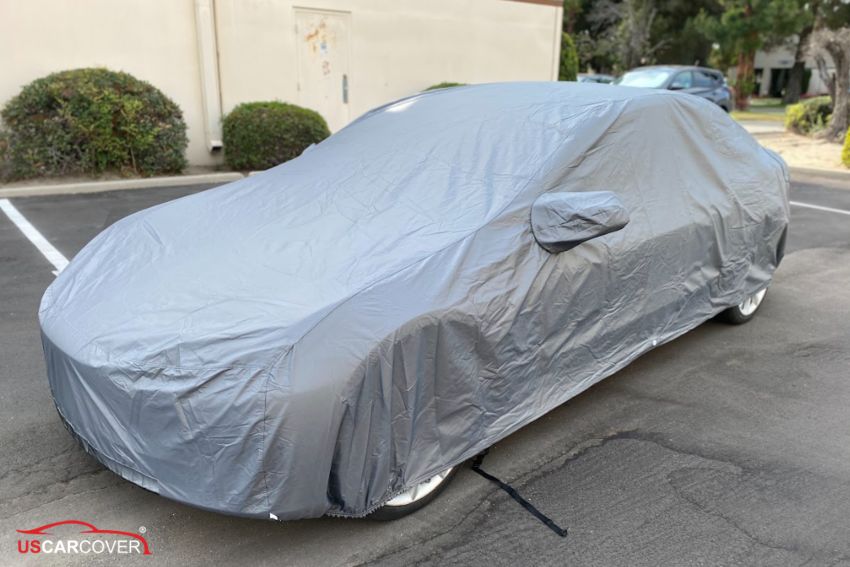
The Car Cover Materials 101 handbook will guide you on how to choose a cover based on the specific climate conditions where you live:
Sun Belt Region (California, Arizona, Texas)
Pain: Road surface temperatures can reach 150 degrees Fahrenheit, and extreme UV rays wither everything made of plastic and rubber.
Material choice: Prioritize Polyester covers with a high-intensity silver reflective coating. Ensure the cover has high-intensity UV radiation protection to protect your Ford F-150 from fading.
Snow Belt and Northeast Region (Minnesota, Michigan, New York)
Pain: Heavy snow falls, road salt corrodes the chassis, and frost clings tightly to doors.
Material choice: You need a thick heavy-duty car cover that can withstand the weight of snow and has optimal waterproofing capabilities. The composite membrane must be durable enough not to become brittle and break in sub-zero temperatures.
Coastal and High Humidity Regions (Florida, Washington, Louisiana)
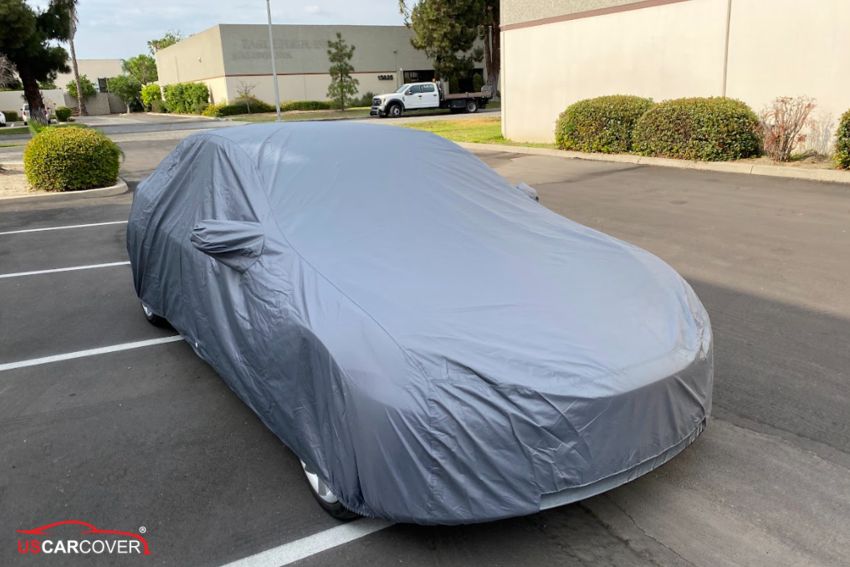
Pain: Salt air from the sea and persistent rain cause rust and interior mold.
Material choice: It is absolute that you must have superior breathable fabric features. Multi-layer one-way breathable fabric membranes are the only lifesaver to perform effective rust prevention.
Parking in a garage or warehouse
Material choice: You do not need strong waterproofing; focus on softness. An indoor car covers made of soft Polyester or woven Satin with a thick micro-fleece lining will be the most perfect pajamas for the car.
Related Articles: Living Near the Coast? Why Salt Air is Your Car's Biggest Enemy and How to Stop It
The Material Memory Effect: Why the cover shape determines safety?
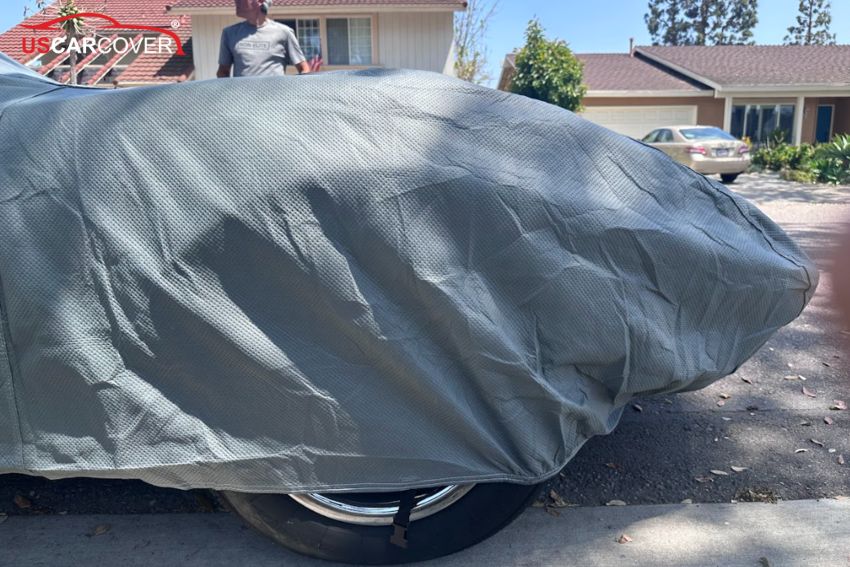
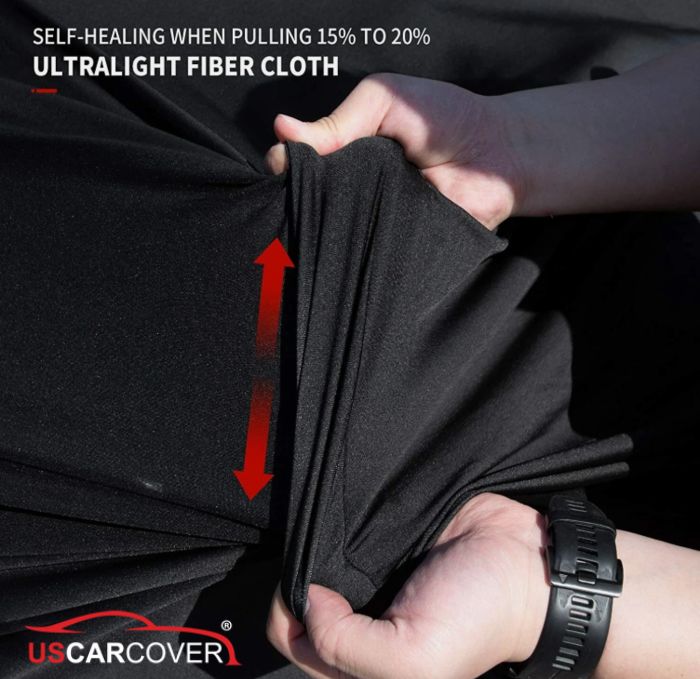
A technical factor few people know in the car cover world is the shape memory capability of the fabric fibers. A quality custom-fit car cover from US car cover uses composite fibers with high elasticity.
When a cover is too wide or sags due to low-quality materials, it will create huge water pockets when it rains. The weight of tens of liters of stagnant water will press down on the hood or roof, which can slightly dent the aluminum shell of modern car models or peel the paint at those pressure points. Our material is designed to always remain taut and flat, directing rainwater to flow away immediately, absolutely protecting the vehicle's surface structure.
Related Articles: Why Breathability is More Important Than Waterproofing: Preventing Mold and Mildew
Where should you buy a quality Car Cover? Why is US car cover the number 1 choice?
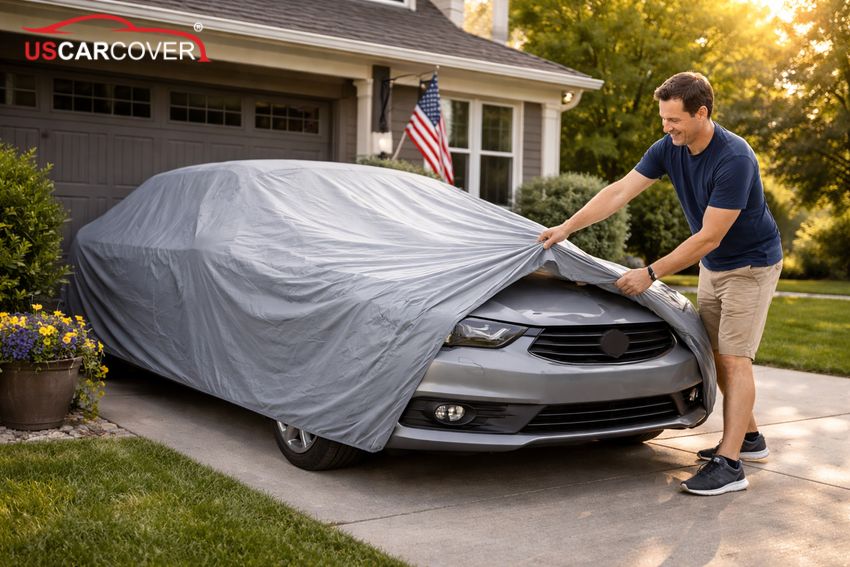
In the United States, the name US car cover is not just a brand; it is a commitment to quality and dedication to the car-loving community.
Deep understanding of American user needs. We do not produce mass covers for every market. Each US car cover is designed based on actual climate data in North America and standard technical specifications of car models such as the Ford F-150, Chevy Silverado, or SUV lines like the Toyota Tundra. We understand that Americans need durability, practicality, and maximum protection.
DaShield Car Cover Series: The symbol of Premium quality. Our products are the crystallization of years of materials science research. Every cover before reaching the customer must pass torture tests for tensile strength, heat resistance, and lining fineness. We are confident that our micro-fleece lining is the softest on the market today, providing superior paint preservation.
Sustainable asset value protection. Using products from US car cover is the smartest way for you to maintain car resale value. A car with perfect original paint, no scratches, and a fresh interior always has a value 15 percent to 20 percent higher than cars that were not shielded. That is why collectors of the Classic American Car always consider us their top partner.
Choose the armor worthy of your passion
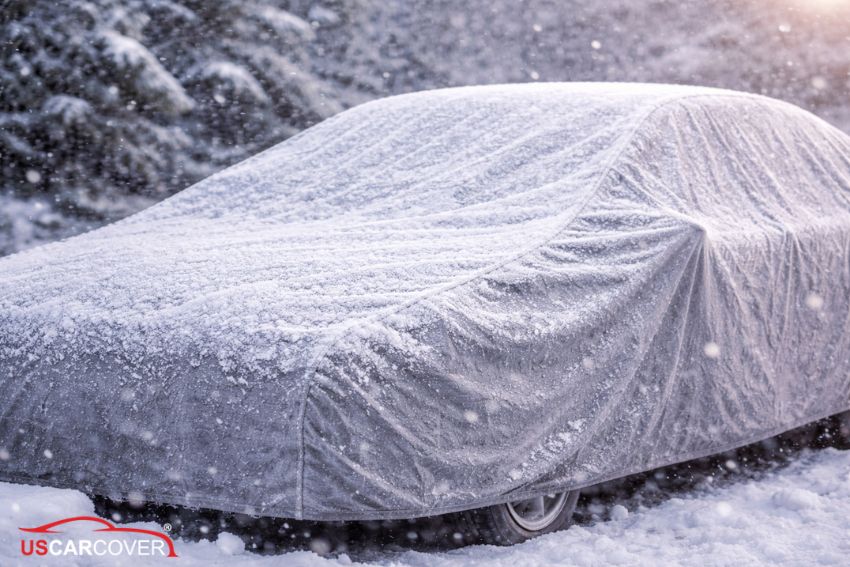
The car is not just a means of transportation; it is the result of labor, a passion, and a part of your lifestyle. Do not let cheap, low-quality materials destroy that beauty. Through this Car Cover Materials 101 article, we hope you have gained a more thorough insight into the importance of fabric material.
From the flexibility and durability of Polyester to the comprehensive protective power of advanced composite materials, every layer of fabric carries a mission. Let US car cover accompany you in preserving timeless values. A standard cover set not only helps you sleep better whenever there is a storm but is also a way for you to show respect for your four-wheeled friend.
Do not hesitate, visit US car cover today to equip the DaShield Car Cover Series: The pinnacle of car protection materials and technology!
