
The symphony of the ocean and the silent wasting of your vehicle: When salt air becomes every car owner's number one enemy. Is there anything more wonderful than waking up each morning in a home overlooking the sun drenched California coast, or enjoying the cool breeze from the Gulf of Mexico in Florida? Coastal living in the US is a luxury dream with the sound of crashing waves and a fresh atmosphere. However, for your powerful Ford F-150 or the Classic American Car you have worked hard to maintain, that sea breeze carries an invisible but extremely cruel "death kiss": Salt Air.
Many car owners in coastal regions often subjectively think: "I do not drive the car into the sea water, so how can it rust?". That is the beginning of a costly mistake. Coastal air is not just wind and water; it is a dense mixture of microscopic salt molecules capable of floating in the air and traveling miles inland. They crawl into the smallest crevices of the engine, stick tightly to the electrical system, and silently gnaw at the chassis from the inside. Without a specialized protection solution like US car cover, your assets worth tens of thousands of dollars are being destroyed every single minute.

At US car cover, we understand the pain of car owners who have to witness their vehicles deteriorate after just a few seasons of driving near the shore. This article will not just be a warning, but a specialized handbook dissecting the destruction mechanism of sea salt and providing the most optimal protection solution for the car loving community in America.
Related Articles: Winter Car Care: How to Stop Your Car Cover from Freezing to the Paint
Salt Air: The invisible assassin and the mechanism of metal "corrosion" at the molecular level
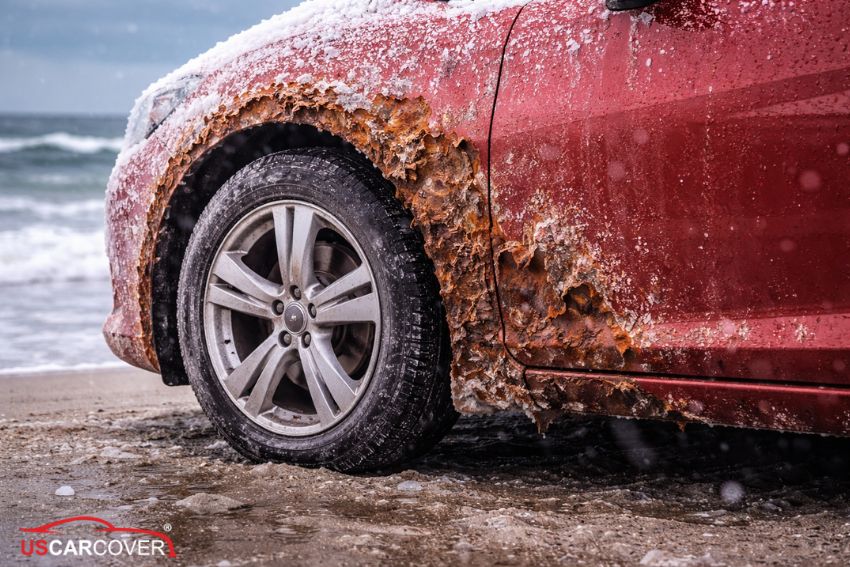
To protect a car effectively, we must first clearly understand who our enemy is. Why is coastal air much more destructive than the air in inland regions?
Electrolysis and the maximum oxidation rate. Salt (Sodium Chloride) is a powerful electrolyte. When tiny salt particles stick to metal surfaces and combine with the high humidity characteristic of coastal areas, they form a perfect conductive solution. In chemistry, this is the ideal environment for electrochemical processes, causing the iron and steel in the car frame to react with oxygen 10 to 20 times faster than normal. Even if your Chevy Silverado is equipped with modern powder coatings, salt will still find the smallest weaknesses like minor swirl marks or weld joints to begin the oxidation (rust) process.
The hygroscopic nature of salt. Another dangerous characteristic of sea salt is its hygroscopic nature. Even when it is not raining, the salt crystals sticking to the car continuously absorb moisture from the air to maintain a wet state on the metal surface. This means the corrosion process occurs 24/7, even if you park the car in a garage if that garage is not tightly shielded from the sea breeze.
The penetration of "Salt Spray". Sea winds blow tiny salty water droplets inland, forming a salty mist covering everything. These particles do not just stop at the car shell but also fly into the engine compartment, sticking to electrical connectors, braking systems, and suspension. The result is stuck mechanical parts, sensor errors, and a seriously shortened overall vehicle lifespan.
Related Articles: Why Breathability is More Important Than Waterproofing: Preventing Mold and Mildew
The pain of coastal car owners: Irreparable losses
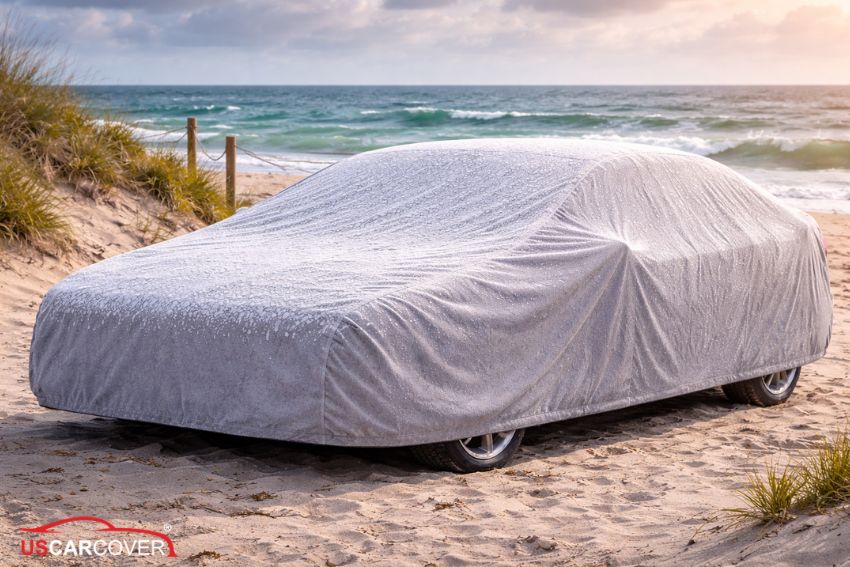
Living near the sea without preparation is like leaving your house doors open before a storm. Below are the actual "pains" that car owners in the US frequently encounter:
Paint catastrophe: From blotches to "bubbling" paint. Salt air is highly abrasive and corrosive. When sticking to the surface for a long time, it starts to destroy the structure of the clear coat. First, you will see the car lose its gloss, appearing blotchy as if eroded by acid. Then, salt seeps under the color coat, creating air bubbles known as "paint bubbling." At this point, repainting an entire Toyota Tundra will cost you thousands of dollars and it is still difficult to regain the original beauty. Protecting Clear coat safety from the start is a prerequisite.
A disastrous drop in Car resale value. In the US market, used car buyers are extremely sensitive to vehicles coming from coastal states like Florida or South Carolina. Once a valuation expert sees signs of rust on the undercarriage or salt stains in the engine compartment, your car's value will immediately drop by 20 to 30 percent. Maintaining Car resale value is not just about protecting the car, but also protecting your own financial investment through the use of US car cover.
Electrical and interior damage: The enemy within. Salt air does not just attack the outside. Through the ventilation system gaps, sea salt enters the cabin. It corrodes metal decorative details, hardens premium leather layers, and most importantly, damages sensitive electronic circuit boards. A Dodge Ram might still look okay on the outside, but an unstable electronic system due to salt air attack will be a nightmare of repair costs.
Related Articles: Top 5 Best Fabrics for Outdoor Car Covers: Which One Survives the Sun?
The functions and benefits of a Car Cover: A steel shield protecting assets from the ocean
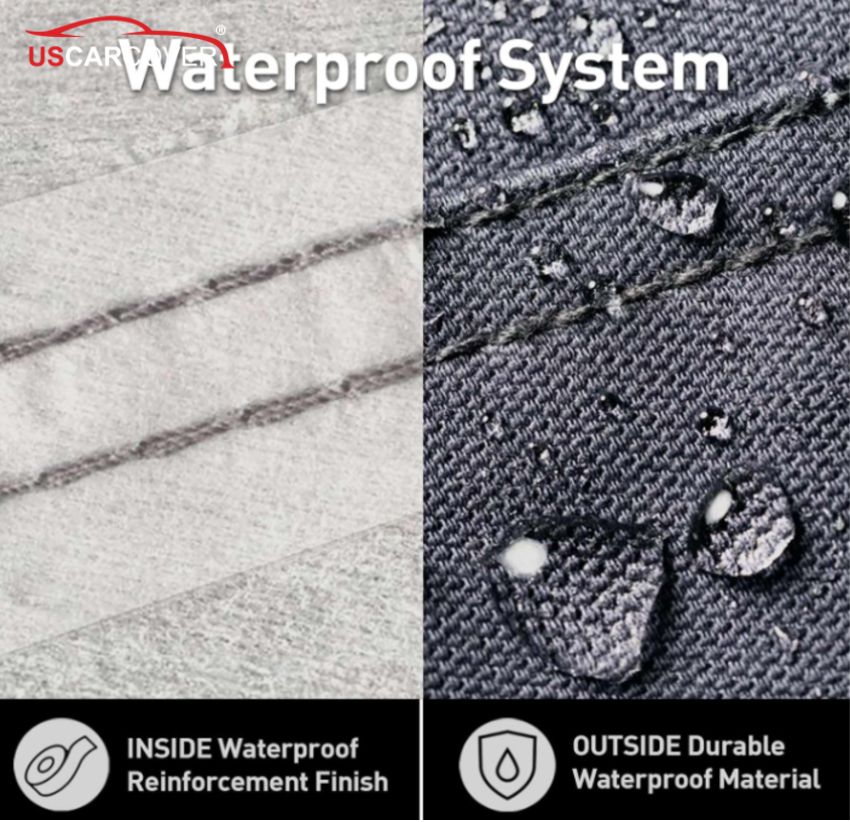
In the war with Salt Air, a car cover is no longer just an "it would be nice" option; it is a mandatory protective device.
A physical barrier preventing salt penetration. The most direct benefit of Outdoor car covers from US car cover is creating an isolated environment for the car. The cover acts as a second skin, absorbing the full attack of salt spray and sea dust instead of the precious paint. When you remove the cover, the car remains as clean as if it were just washed.
Against UV radiation protection and Acid rain defense. Coastal areas often come with intense sun and sudden rains that carry acidity due to pollution combined with salt. Our covers are integrated with UV reflective layers, keeping the interior temperature stable and preventing interior fading. This is multi-layered protection that no wax layer can replace.
Protection from sea bird droppings and tree sap. The coast is home to many sea birds. Sea bird droppings contain extremely high acid content, which when combined with sea salt, creates a "super-corrosive" mixture that can penetrate paint in just one hot day. Using a cover is the only way to ensure absolute Bird droppings protection for your vehicle.
Related Articles: Outdoor vs. Indoor car covers: Which one do you actually need?
Breathability: Why the ability to "breathe" is a vital factor by the sea?
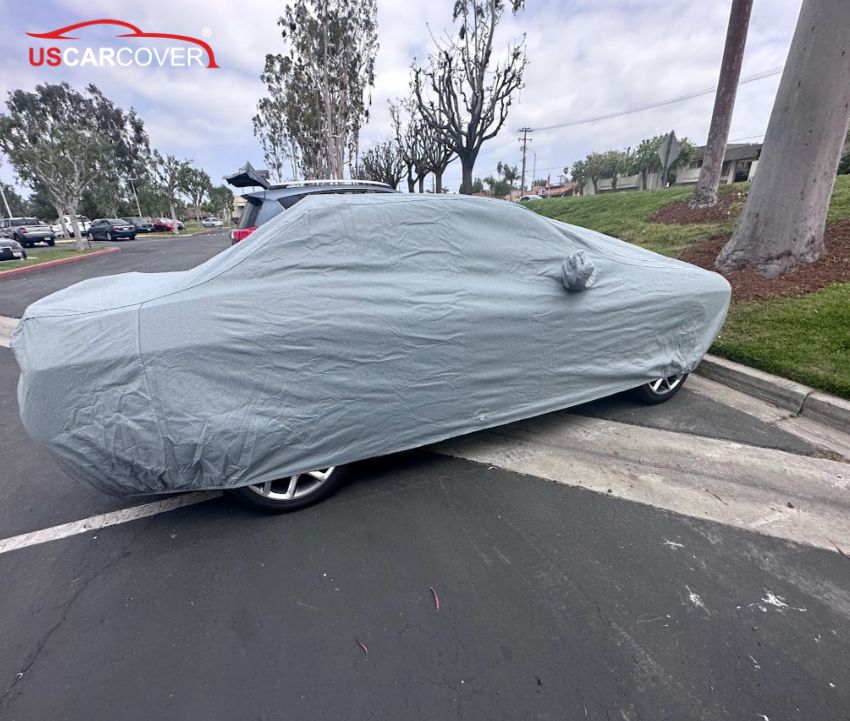
This is the specialized knowledge that US car cover wants every car owner to understand. Never buy a cover just because it is "thick" or "completely waterproof" if you live near the sea.
The "Salt Sauna" trap of cheap covers. If you use a cheap, airtight PVC or nylon cover, you are accidentally accelerating the destruction of the car. Moisture carrying salt from the ground will rise and be trapped under the airtight plastic cover. Under the sun's heat, the space under the cover becomes a high concentration "salt sauna." As a result, the car rusts many times faster than when not covered.
The solution from Breathable fabric. Our premium covers use micro-filtration membrane technology. It acts like a one-way valve: preventing water and salt molecules from entering from the outside, but allowing moisture and heat from the inside to escape easily. This Breathability keeps the car surface dry and cool, neutralizing the environment for rust and mold. This is the key to Vehicle preservation.
Guide to choosing the right Car Cover for the US coastal region
Choosing a cover is like choosing a suit: It must be the right material and it must fit.
Prioritize high end Polyester Cloth material. High tech treated Polyester is the top choice for coastal areas. Unlike Oxford or common canvas fabrics, US car cover Polyester has extremely high tensile strength, does not rot under the influence of salt, and has good natural UV resistance. It also does not absorb moisture, keeping the cover light and dry.
Micro-fleece lining: Gentle protection. Did you know that sea salt when dry will crystallize into sharp particles like sand? If your cover does not have a soft lining, every time the sea breeze blows, the cover will rub these salt crystals into the paint, creating thousands of tiny swirl marks. A thick and smooth Micro-fleece lining will wrap these salt particles, keeping them from direct contact with the paint, ensuring absolute Swirl marks prevention.
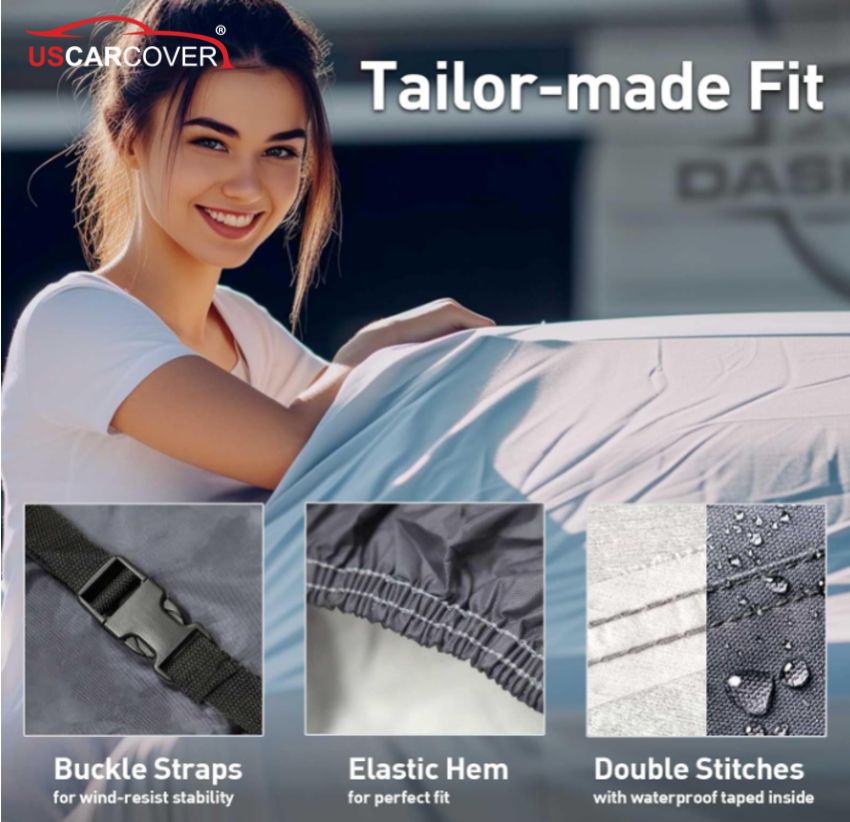
Custom-fit car cover: Do not let the sea wind beat you. Sea winds are often strong and unstable. A loose "free size" cover will be constantly whipped by the wind, not only creating annoying noise but potentially being blown away. A Custom-fit car cover precisely tailored for each model like the Ford F-150 or Chevy Silverado will hug the body tightly, minimizing the area for wind to enter and ensuring absolute stability even in coastal storms.
"The Coastal Shield": A 4-layer car protection strategy from US car cover
To deal with the harshness of the ocean, we propose a 4-layer protection strategy that every coastal car owner should apply:
- Nano Coating (Chemical layer): Apply a high quality ceramic or wax layer to create surface smoothness.
- Air Cushion (Physical layer): Use a US car cover to block 99 percent of sea salt.
- Moisture Release (Technology layer): Utilize the Breathability of the cover to keep the car dry.
- Fixing Layer (Safety layer): Use the Heavy-duty car cover strap system so the cover always stands firm against the sea wind.
- Guide to proper use and maintenance of covers in coastal areas
Buying a good cover is only half the battle. How you use it determines the long term protection effectiveness
Related Articles: Classic American Car Restoration: How Our Covers Preserve Automotive History
Where to buy a quality car cover? US car cover: The leading choice for the American car community
In a demanding market like the US, US car cover is proud to be the first name mentioned when talking about specialized car protection solutions, especially in coastal areas.
Why are we experts in coastal car protection?
Specialized salt resistant technology: Our fabrics undergo thousands of hours of "Salt Spray Tests" to ensure no degradation by sea salt.
Precision fit down to the millimeter: With a database of thousands of models, from massive trucks like the Dodge Ram to elegant sedans, we ensure absolute fitment.
Timeless durability: A US car cover has a lifespan 3 to 4 times longer than common covers, making it a smart investment for the future.
Load bearing strap system: Designed specifically to withstand sea winds, ensuring the cover never leaves the car unless you want it to
American standard customer service: We do not just sell covers; we provide absolute peace of mind for car owners.
Let the sea bring joy, not take away your assets
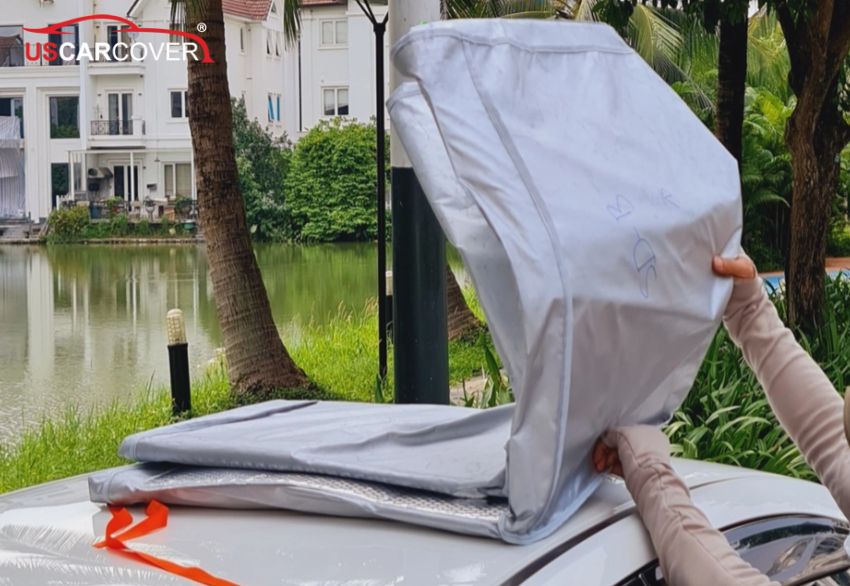
Coastal living is a wonderful privilege, and your car deserves to accompany you on those journeys along the ocean in its most radiant state. Do not let the silent destruction of Salt Air take away the value and beauty of your car. Investing in a quality cover from US car cover is not just protecting a means of transport, it is protecting a passion, effort, and financial value.
Take action today before the first rust spots appear. Thorough preparation is the best way for you to fully enjoy the taste of the sea without worrying about the "health" of your vehicle. Visit US car cover today to find the most perfect armor for your Ford F-150, Chevy Silverado, or Toyota Tundra! We are always ready to accompany you in protecting your passion on every coastal road
