
Covering a van sounds like covering a car, only bigger. In practice it's a different job. A high-roof Sprinter is taller than most people can reach, the same model comes in several lengths, and a lot of vans carry ladders, racks or solar panels on top. Get the size wrong and the cover either won't go on or flaps around in the wind all night.
This guide covers who actually needs a van cover, how to work out the right size for your van, what changes for cargo vans, minivans and camper vans, and how to get a cover over a tall roof when you're on your own.
Does your van need a cover?
A cover earns its keep when a van sits outside for long stretches. That usually means one of these:
- Work vans parked outside overnight and on weekends. Sun, sap and bird droppings do most of their damage while a van sits still.
- Camper vans between trips. A conversion can sit in a driveway for weeks, and the roof, seals and decals take the sun the whole time.
- Minivans that live in the driveway because the garage is full.
- Vans stored for a season, whether that's a summer camper put away for winter or a work van parked during a slow stretch.
It's worth being honest about the other side too. If your van leaves at 6 a.m. and comes back after dark every day, a full cover will probably spend most of its life in the bag, because putting it on twice a day gets old fast. In that case a windshield sunshade and regular washing may be all you need, and a cover is better saved for weekends and days off.
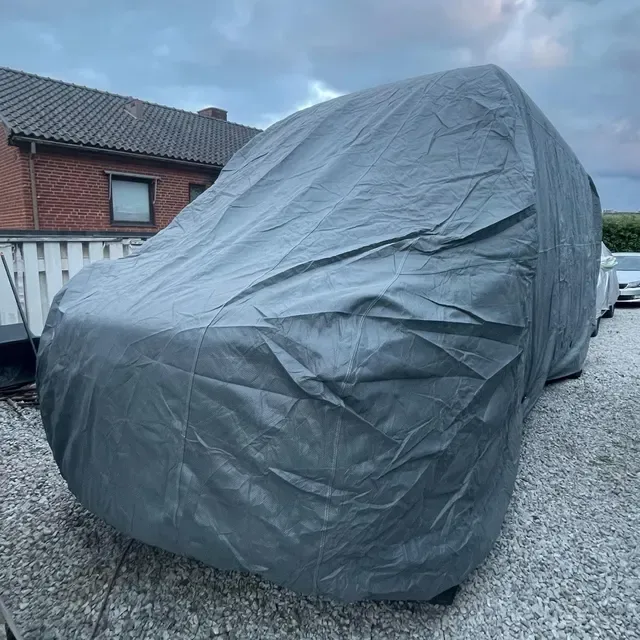
Why covering a van is harder than covering a car
Height
The roof of a high-roof cargo van is around nine feet off the ground. You can't reach the middle of it from the ground, and you shouldn't be climbing onto it either. That changes how you put a cover on, which we'll get to below.
Big, flat sides
A van's sides act like a sail. On a windy night, any loose fabric along those panels will lift, snap back and rub. That rubbing is what scuffs paint and wears covers out early, so on a van, a close fit and straps under the body matter even more than on a sedan.
Things on the roof
Ladder racks, roof bars, cargo boxes, solar panels, roof fans and AC units all change the shape the cover has to go over. A cover cut for a bare roof won't sit right over a tall rack.
Doors you use all day
Sliding side doors and rear barn doors mean you'll usually take the cover off before you load anything. That's another reason to pick a cover that's quick to put on and take off, rather than one that fights you every time.
Getting the size right: wheelbase, roof height and body
This is where most van cover mistakes happen. With a car, the model and year usually tell you everything. With a van, the same model in the same year can come in several lengths and roof heights, and they can differ by several feet. A cover cut for a standard roof won't stretch over a high roof, and a cover for a long body will hang in loose folds on a short one.
That's why we cut a separate pattern for each van configuration. On each model page you pick your van's wheelbase and roof height first, then you see only the covers that fit that exact setup.
Here's how the common full-size vans break down in their current generations:
| Van | Wheelbase / length | Roof heights |
|---|---|---|
| Mercedes-Benz Sprinter (2019 on) | 144 in, 170 in, 170 in extended | Standard, high |
| Ford Transit (2015 on) | Regular, long and extended length | Low, medium, high |
| Ram ProMaster | 118 in, 136 in, 159 in, 159 in extended | Low, high, super high |
| Chevrolet Express / GMC Savana | 135 in, 155 in | One factory roof height |
Not every combination exists on every model, and the options have changed between generations, so treat the table as a guide rather than a spec sheet.
How to check your van's configuration
- Look at your paperwork. The window sticker, the original sales paperwork or the trim listing usually spells out the wheelbase and roof height, for example "170 in WB, high roof".
- Measure if you're not sure. Measure the full length from bumper to bumper, and the height from the ground to the highest point of the roof itself, not the rack.
- Note anything that's been changed. Raised roofs, pop-tops, rear-mounted boxes and bumper extensions all change the size. A converted van may not match its factory configuration any more.
For more on measuring and reading cover sizes, see our car cover sizing guide.
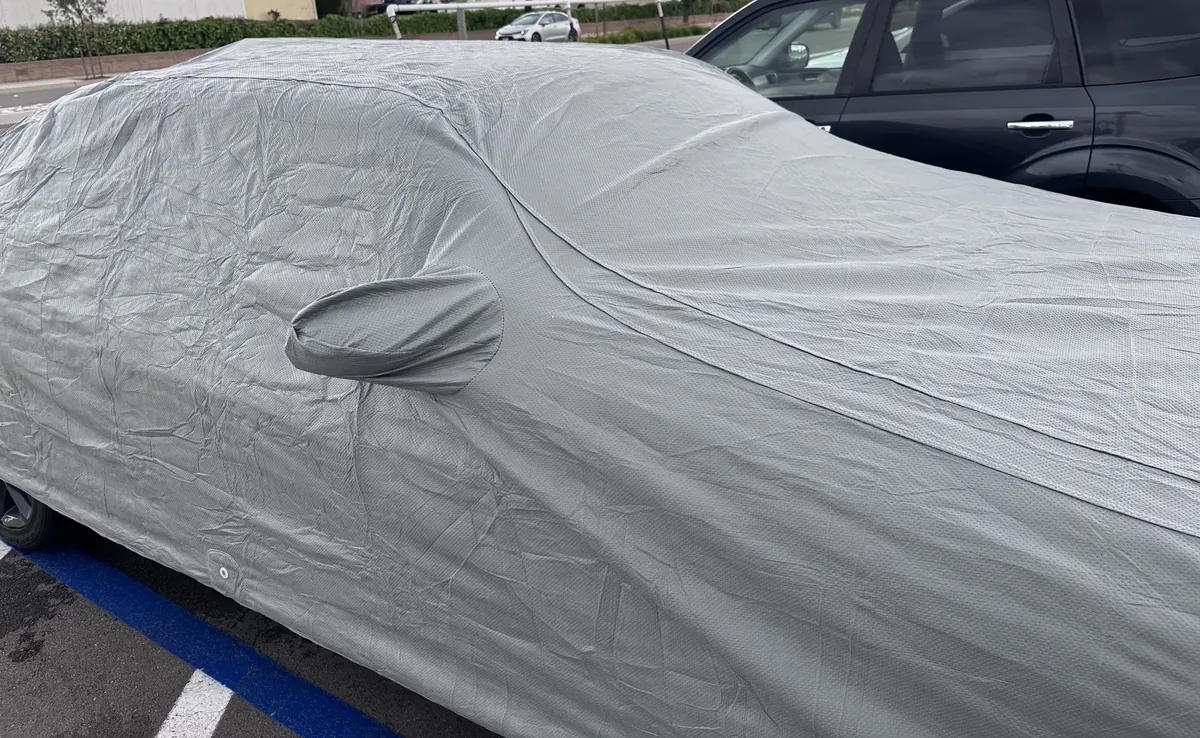
Cargo vans, minivans and camper vans need different things
Cargo and work vans
Picture a plumber's Transit that sits in the driveway every evening and all weekend. The paint takes the afternoon sun, the roof collects leaves and sap, and the van is the business's rolling billboard, so faded paint and peeling graphics cost money. A cover here is mostly about protecting the paint and the lettering. If the van carries a ladder rack, read the roof rack section below before you order.
Minivans
Minivans are much closer to SUVs. They come in one roof height and you can reach most of the roof from the ground, so putting a cover on is easy. The main choice is fabric, based on where you park. We carry patterns for the common family vans, including the Honda Odyssey, Toyota Sienna and Chrysler Pacifica. Compact vans such as the Ford Transit Connect and the Mercedes-Benz Metris also have their own patterns.
Camper vans and conversions
Camper vans are where covers do the most good and need the most care. A conversion sits for weeks between trips, and everything on the roof, from vents and fans to solar panels and sealant, ages in the sun. But the same roof hardware is what makes sizing tricky.
If your van is a factory body with low-profile add-ons, the standard pattern for its wheelbase and roof height usually works. If it has a tall solar array, a roof deck or a raised roof, it may need a different pattern. Larger motorhomes and trailers are better served by an RV cover.
What about roof racks, ladders and solar panels?
It depends on the van and how tall the add-ons are. Low roof bars and flat-mounted solar panels often sit inside the extra room a high-roof pattern already has. Tall ladder racks, cargo boxes and solar panels on raised frames add height that the standard pattern for your van doesn't account for.
If you're not sure, send us a couple of photos of the van from the side and the front, with the height to the top of the rack or panels, before you order. Email them to [email protected]. Depending on the measurements, we can often recommend a cover pattern made for a different, larger vehicle that fits your setup better.
Choosing a fabric for where you park
All three of our van cover series are built for outdoor use, with mirror pockets, an elastic hem and underbody buckle straps. The difference is in the layers:
- DaShield Ultimum (6 layers). Our heaviest outdoor cover, with a soft fleece inner lining. A good pick for vans that sit outside year-round in strong sun, heavy rain or snow.
- WeatherTec UHD (5 layers). Heavy-duty outdoor protection with a soft inner lining, and a little lighter to handle on a tall van.
- WeatherTec HD (4 layers). Everyday outdoor protection for milder climates or for vans that are covered part-time.
A rough way to choose: in the Sun Belt, prioritize UV resistance and a light color that reflects heat. In rainy or snowy places, look for a waterproof outer layer that still breathes, so condensation can escape. If you live near the coast, choose a cover that breathes well and take it off to let the van air out after storms. You can compare all three side by side on our van covers page, and our guide on waterproof vs water-resistant covers explains why breathability matters as much as keeping water out.
How to put a cover on a tall van
The trick with a high-roof van is to never try to throw the cover over the top or drag it across the roof. Unroll it along the roof from a step ladder instead.
- Start with a reasonably clean, dry van. Rinse off grit and dust first. Dirt trapped under a cover is what scratches paint.
- Find the front. Most covers are labeled. Set the rolled-up cover on the front of the roof from a step ladder at the front bumper.
- Hook the front first. Pull the front hem down over the bumper and fit the mirror pockets. This anchors the cover so it doesn't slide.
- Walk it back. Move the ladder to the side and unroll the cover toward the rear, lifting the fabric rather than pulling it across the paint.
- Drop the sides and the rear. Let the sides fall, then pull the rear hem down under the back bumper.
- Clip the straps. Buckle the underbody straps and snug them up. On a van, this is the step that stops the wind from lifting the cover.
- Lock it if you need to. If your cover has grommets, run a cable lock through them and under the van.
To take it off, do it in reverse. Unclip the straps, lift the hem off both bumpers, fold each side up onto the roof so the dirty outside folds in on itself, then roll from front to back and lift it off from the ladder. Never climb onto the roof of a covered van. The fabric is slippery and you can't see what's underneath.
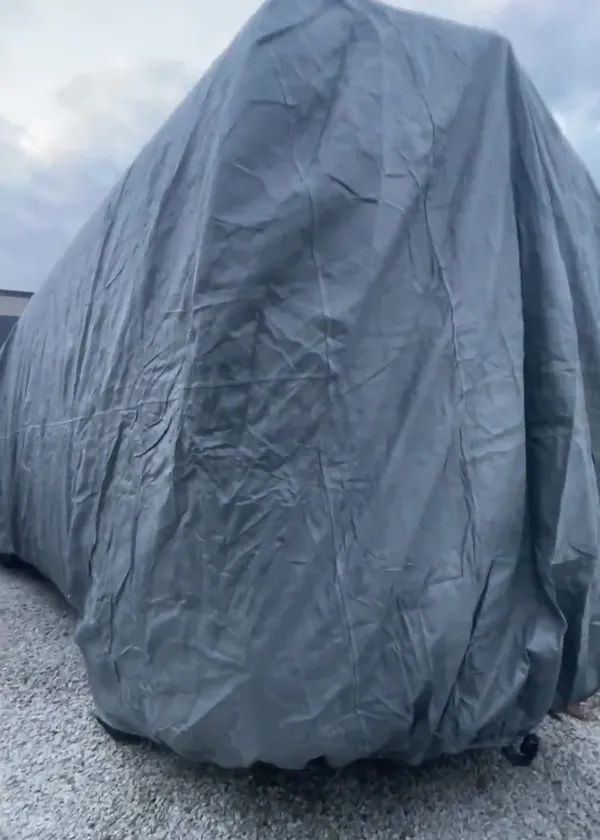
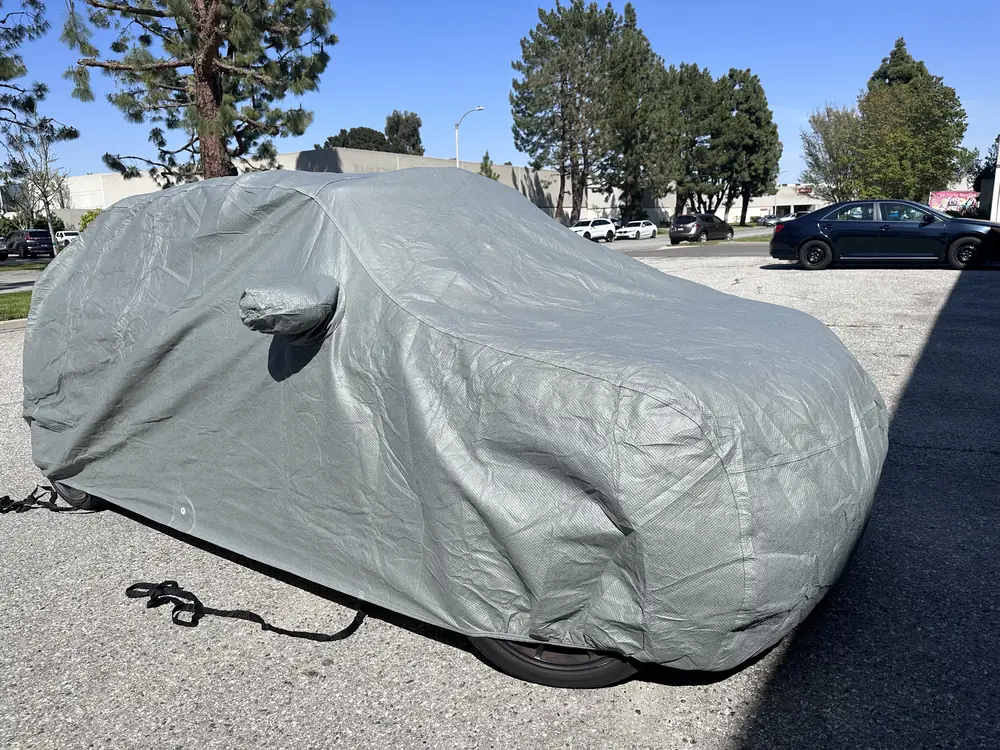
Van covers through the seasons
Winter. A cover keeps snow and ice off the glass and paint and makes clearing snow much easier, but it won't help the roof carry a heavy load. Brush heavy snow off the cover from the ground with a soft broom. If the van is going into storage until spring, our winter storage checklist covers the battery, fuel and tires too.
Summer. Sun is the slow killer for vans: faded paint, cracked rubber seals, brittle roof sealant and cooked dashboards. This is where a cover pays off the most for a van that sits.
Storm season. Strap the cover down tight before high wind. If you expect a real storm, a loose cover is worse than no cover, so either strap it properly or take it off.
For a full season-by-season rundown, see how to weatherproof your car.
FAQ: van covers
Do you make covers for high-roof vans?
Yes. We cut a separate pattern for each wheelbase and roof height we list for a van, including high-roof versions. Pick your configuration on the model page so you only see covers made for it.
Are van covers waterproof?
Our outdoor van covers have a waterproof outer layer to keep rain and snow off the van, and they're built to breathe so moisture underneath can escape. A cover that doesn't breathe at all can trap condensation against the paint.
Will a van cover fit if I have a roof rack, ladder or solar panels?
It depends on how tall they are. Low racks and flat solar panels often fit under a high-roof pattern. For taller setups, send us photos and the height to the top of the rack, and we'll suggest a pattern that fits.
Can I use a van cover in winter?
Yes. It keeps snow and ice off the paint and glass. Strap it down, brush heavy snow off from the ground, and don't put the cover on over a van that's caked in road salt.
What if the cover doesn't fit my van?
Our van covers come with a 30-day money-back guarantee. If you're unsure about your configuration, contact us before ordering and we'll help you confirm the right pattern.
Can I drive with the cover on?
No. Vehicle covers are made for parked vehicles only. Take it off before you drive.
