
From the very first moment you drive a Tesla in the United States, what captivates you might be the instant acceleration, the smart driver assistance features or the minimalist cabin centered around a large central screen. But after a few scorching summers, several days of parking outdoors and a few years of daily use, you will start to notice a very ordinary but very annoying problem: a cabin that feels like an oven, interior materials aging fast and a central screen that constantly has to endure heat and direct sunlight.
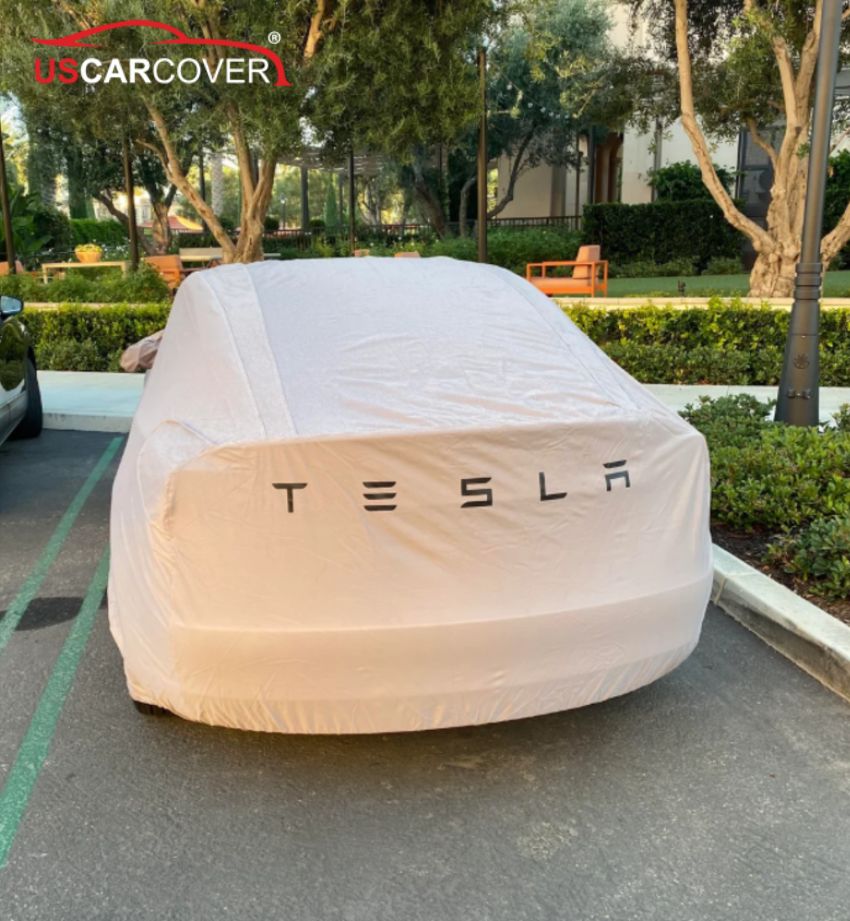
That is when the phrase Tesla car cover starts to have a much more practical meaning than just another accessory that looks nice. Behind that seemingly simple cover is an entire story about UV, heat, interior lifespan, electronics durability and the quality of each experience when you open the door and step into the car. If you clearly understand the reasons, causes, consequences and solutions, you will see that investing in Tesla car cover is a logical decision, not just a matter of “buying it because you feel like it.”.
Related Articles: Sunbeam car cover: reducing cabin heat, protecting fabric/leather interior and dashboard from strong UV
How Tesla is used in the United States and why Tesla car cover becomes necessary
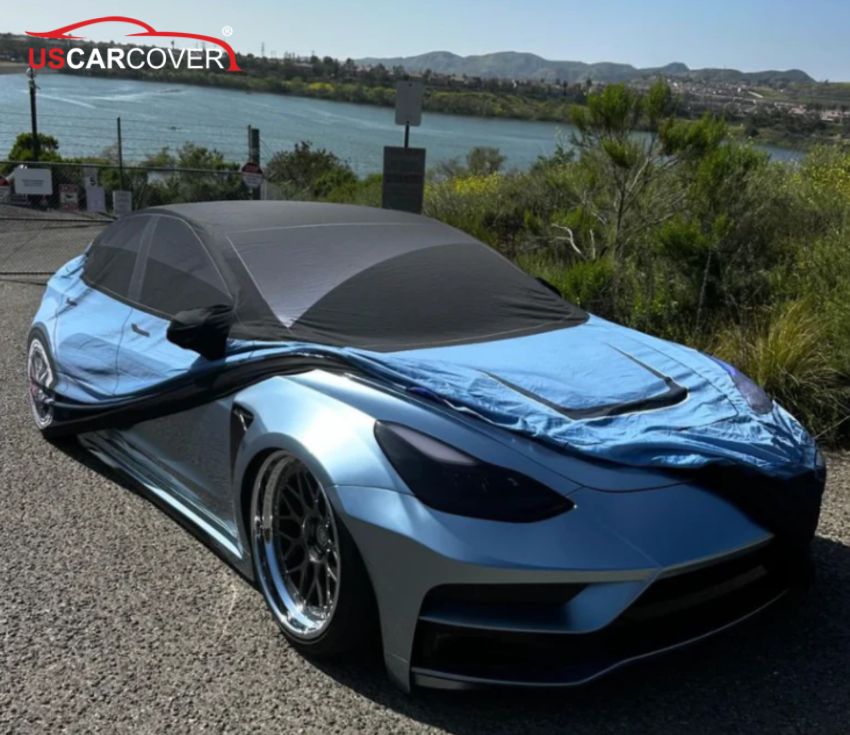
As Tesla vehicles appear more and more frequently on American roads, especially in densely populated urban areas, the sight of Model 3, Model Y, Model S and Model X parked in open office lots, apartment lots, driveways and streets has become very common. Not everyone has an enclosed garage, and certainly not everyone has a covered spot at work.
In that context, a Tesla basically has to “live with” intense sun, strong UV, fine dust, sudden rain, light snow, falling leaves, bird droppings, tree sap and more. Many owners believe that Tesla is a modern electric vehicle, that it has Cabin Overheat Protection, high quality glass and good interior materials, so they assume that “it will be fine, it is built to last.” This is the first misconception.
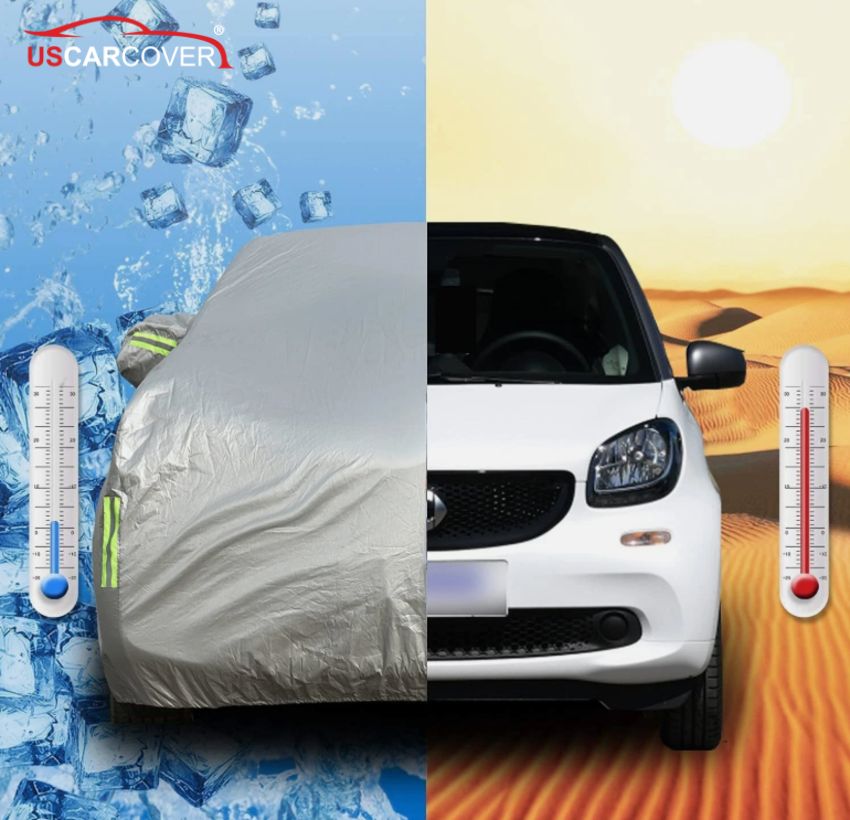
From a technical standpoint, Tesla is indeed engineered to withstand harsh conditions. However, when it comes to the causes of damage, sunlight and UV do not distinguish between a Tesla and a gas car. Leather, synthetic leather, soft plastic, adhesive, screen coatings all follow the same physical rules: when they are too hot they expand, when they cool quickly they contract, and prolonged UV exposure causes aging, discoloration and surface cracking. The consequence is that the cabin ages faster than the car’s actual age, the central screen loses its crisp look and the overall premium feeling of the interior fades.
At this point, Tesla car cover is not just about keeping the car clean. It becomes a direct solution to cut down external harmful factors before they have the chance to reach the interior and electronic components inside.
Related Articles: Subaru car cover: the first shield for Subaru in Sun Belt, Snow Belt and coastal environments
The pain of not using Tesla car cover: hot cabin, aging interior and a “punished” central screen
Hot cabin from discomfort to long term consequences
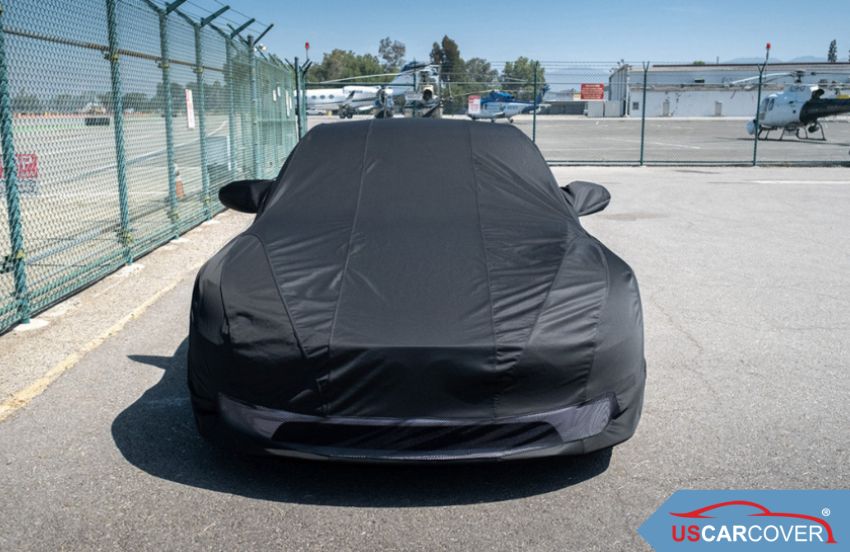
Imagine a typical workday. In the morning you drive your Model 3 or Model Y to the office and park in an uncovered lot with no Tesla car cover. From around 10 a.m. to 4 or 5 p.m., the sun shines continuously on the windshield, glass roof and side windows. The glass traps most of the heat inside the cabin, creating a greenhouse effect.
The reason the cabin gets so hot is that heat radiation from the sun passes through the glass fairly easily, but once surfaces inside absorb that heat and re-radiate it, the energy has a much harder time escaping. Heat is trapped and builds up over time, making the temperature inside the car significantly higher than outside.
Another underlying cause is the minimalist interior design of Tesla. There are few natural airflow paths, a large, flat dashboard, and the seats, steering wheel and screen all sit in zones that receive direct heat. When you open the door after work, that blast of hot air is not just a momentary discomfort. It is a sign that every material inside has just gone through hours of “slow baking.”.
Short term consequences are obvious. You feel tired and irritated, you have to run the air conditioning at full blast, and the cooling system has to work harder, draining the battery faster. Long term consequences are hundreds or thousands of hours of interior materials living in high temperature conditions, drastically reducing the lifespan of leather, plastics, seals and adhesives. The practical solution that looks simple but is very effective is to put on a Tesla car cover before you walk away from the car. With Tesla car cover, the amount of solar radiation entering the cabin is greatly reduced, interior temperatures do not reach the same extreme levels and the air conditioning has an easier job. You notice the difference every time you open the door.
Related Articles: Studebaker car cover: a protection solution for a discontinued brand
Strong UV as an invisible enemy of leather, plastic and the central screen
Not everyone feels the impact of UV in the short term because you do not see it the way you see dust or scratches. But scientifically, UV rays break down the molecular structure on the surface of materials, making them lose elasticity, change color, become brittle and more likely to crack.
The reason Tesla is quite “sensitive” to UV is that its interior uses many flat, exposed surfaces with little shading, a large central screen and simplified trim. Leather and synthetic leather on the seats, steering wheel and armrests, along with soft plastic on the dashboard and door panels, are exactly the places UV attacks the most.
The consequence of letting a Tesla sit in the sun for years without Tesla car cover is that you start seeing seat color fade and become uneven, with lighter and darker patches. The surface becomes drier and less smooth than when new. The dashboard may develop regions with odd glossy reflections that later turn into fine cracks. The central screen, which is at the heart of the Tesla experience, can suffer premature degradation of its coating, reduced anti-glare performance and lower clarity. In extreme cases, long exposure to heat and UV may create a risk for internal components.
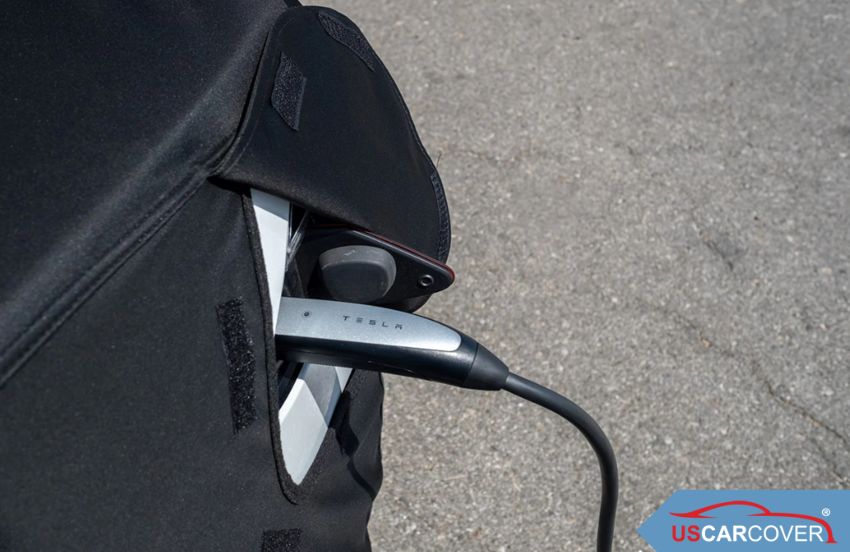
The solution is to cut off as much UV as possible before it enters the cabin by adding an external shield. When you use a quality Tesla car cover, most of the UV is reflected or absorbed at the surface of the cover and never reaches the glass. It does not get the chance to strike the dashboard and seats directly. Over time, this is a key factor in keeping colors richer, surfaces less cracked and the central screen looking and performing like new for longer.
Electrical and electronic systems forced to work harder because the car is always hot
Inside a Tesla, you do not only have upholstery and plastic. There are many control modules, sensors, cooling systems, chargers, inverters, screens and amplifiers. All of these are electrical and electronic components that always “dislike” prolonged high temperatures.
The reason many owners are surprised is that even though Tesla has cabin protection modes, if the car has to run fans and air conditioning often to keep the interior under a certain temperature, the system is consuming energy and stressing components. The battery has to supply extra energy for cabin cooling when parked instead of dedicating that energy entirely to driving range.
The consequence is that in hot weather, your real world driving range can drop and fans, air conditioning and thermal control modules work more often. Over the long term, this increases wear on the system. By simply putting on a Tesla car cover, the amount of heat entering the cabin drops significantly, so the cabin protection features do not need to kick in as frequently. The battery is under less strain and electronics live in a less extreme environment. This is an indirect but very realistic way to extend the car’s overall lifespan.
Related Articles: Singer car cover: preserving vehicle value, covering Singer cars stored long term in the garage
How Tesla car cover works as the “first shield"
Blocking UV and cutting heat from the outside
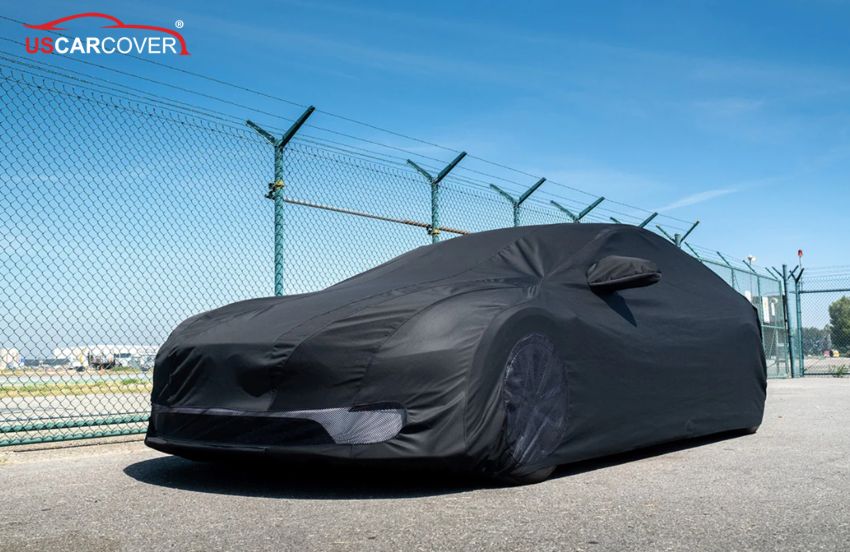
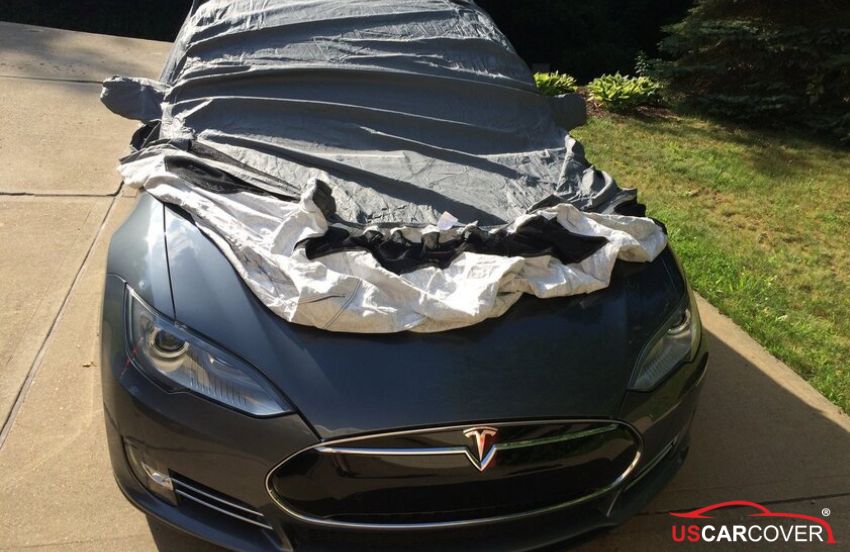
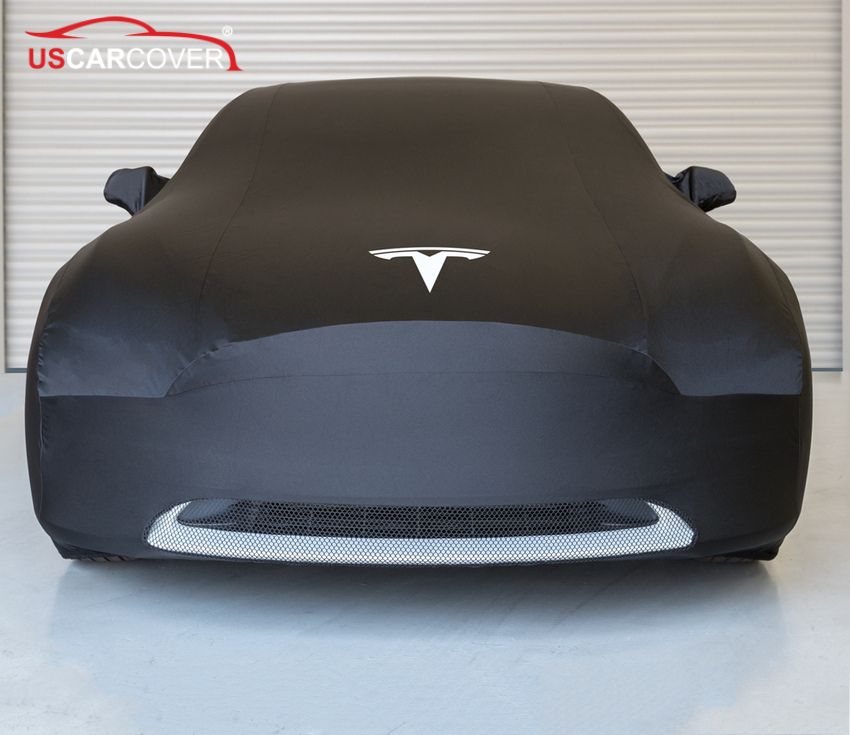
When you put a Tesla car cover over your car, you are placing a layer of material between the environment and the glass, paint and interior. Not all covers are created equal. A proper Tesla car cover needs an outer surface that reflects light well, limits heat absorption and is treated to resist UV.
The basic reason is that if the cover absorbs too much heat, it will heat up and pass that heat down into the air below, then to the glass and body. If the material leans toward reflecting light, less energy goes through. At the same time, the UV resistant layer reduces how much ultraviolet light passes through the fabric and protects glass, paint and the interior underneath.
The positive result of using Tesla car cover is that you create a first “firewall” for sun and UV. Instead of letting glass and the interior take direct hits, the cover becomes the surface that receives most of the “impact.” Heat and UV are strongly reduced before they reach the central screen, dashboard or seats.
Related Articles: Simca car cover: preventing paint fade, rust, and water stains on Simca bodywork
Keeping the car’s internal environment more stable and reducing hot cold swings
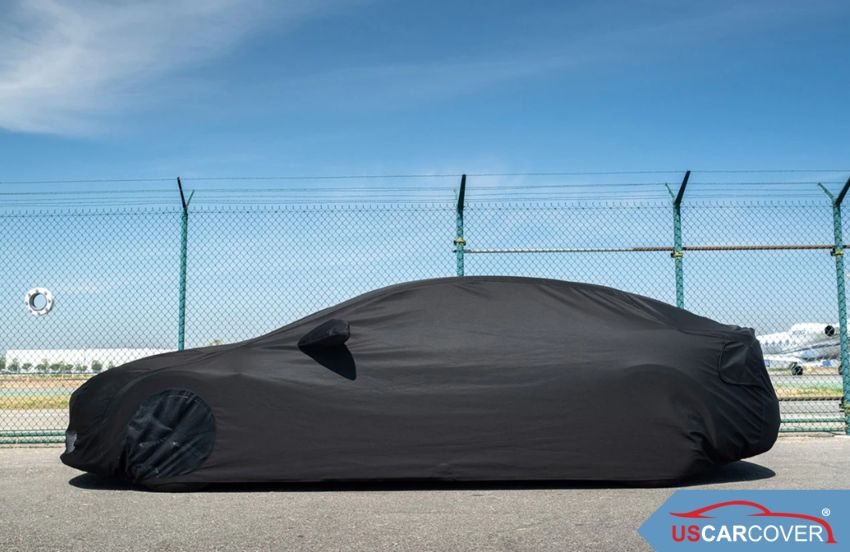
One factor that often gets overlooked is temperature swings. It is not just high temperature but rapid changes between hot and cold that make materials suffer. When a Tesla bakes in the sun and then the air conditioning is turned on very low to cool quickly, interior materials go through a thermal shock, expanding and then contracting in a short time.
The reason this becomes more serious with Tesla is that the cabin is enclosed, glass-heavy and has little natural airflow. Every time you open the door and then run the air conditioning to cool rapidly, large surfaces like the dashboard, instrument panel, screen and seats experience sharp temperature gradients.
With Tesla car cover, the cabin does not heat up as much, so the starting point for cooling is more moderate. The air conditioning does not need to drop the temperature from an extreme high to a very low setpoint in one burst. Temperature swings are reduced, and materials do not have to expand and contract so aggressively. The positive result is greater durability, fewer cracks, less warping, better integrity of seals and adhesives and less thermal stress on the central screen.
Protecting paint, glass and exterior details at the same time
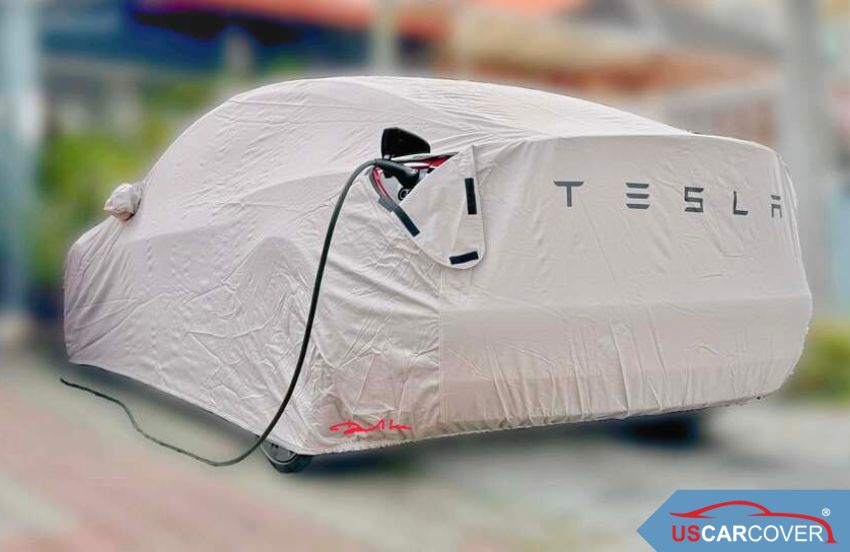
When people hear Tesla car cover, many only think about the cabin and screen. But the cover also protects paint, glass, trim, chrome accents, mirrors and cameras. Parked outside, the body of a Tesla is constantly subjected to dust, pollen, bird droppings, tree sap, acid rain and dirty water from construction sites and parking lots.
Without Tesla car cover, all of that falls directly on the car. This is dangerous because some contaminants, if left long enough, can corrode or stain paint, glass and plastic. Bird droppings are acidic, tree sap hardens and clings, and dried dirty rainwater leaves stubborn marks. The consequence is more frequent polishing and corrective detailing, which costs time and money.
With Tesla car cover, most dust, bird droppings, sap and grime end up on the cover. Covers are much easier and cheaper to clean, wash or replace than paintwork and glass. As a result, the exterior stays cleaner and more glossy for longer, and the aesthetic value and resale value of the car are better preserved.
Related Articles: Shelby car cover: the secret of long time Shelby owners to keep their cars from deteriorating
Where to buy quality Tesla car cover for peace of mind
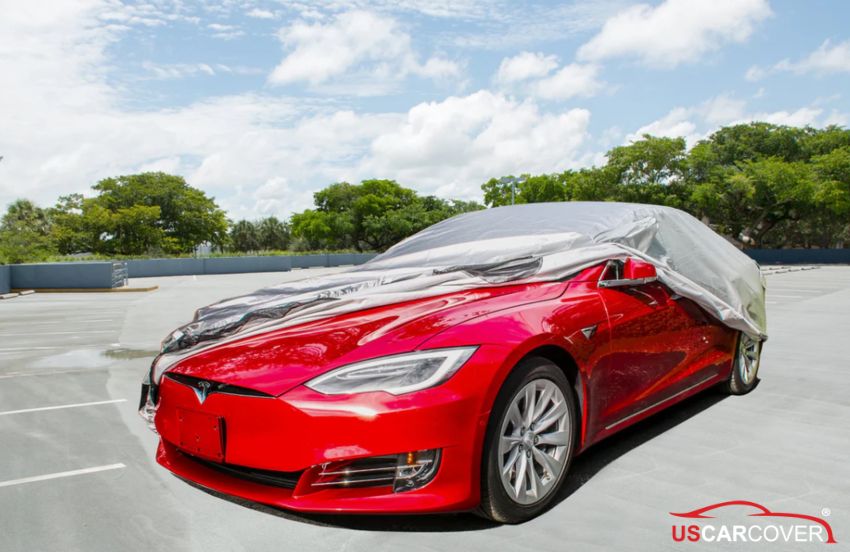
Once you decide to use Tesla car cover, the next question is where to buy it. The market is full of covers at all price points, but not all of them deserve the responsibility of protecting the paint, interior and central screen of a Tesla.
A logical choice is to go to specialists in car covers who understand the needs of American drivers, have experience with many kinds of vehicles and are familiar with Tesla in particular. Among these, US Car Cover is a name worth considering when you want a proper Tesla car cover for Model 3, Model Y, Model S, Model X and other models.
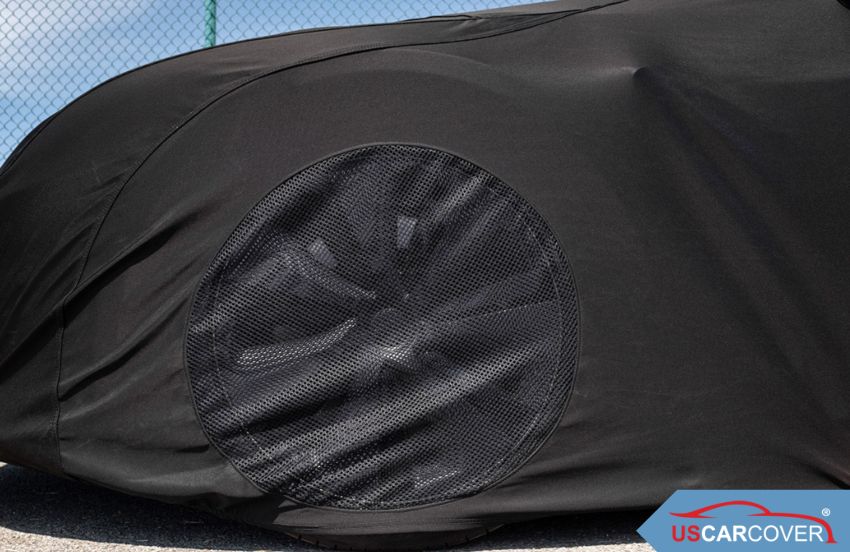
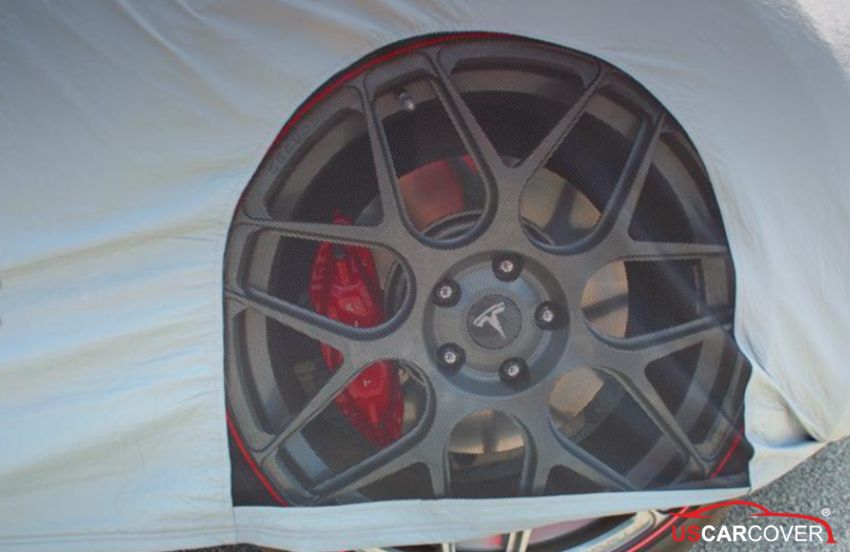
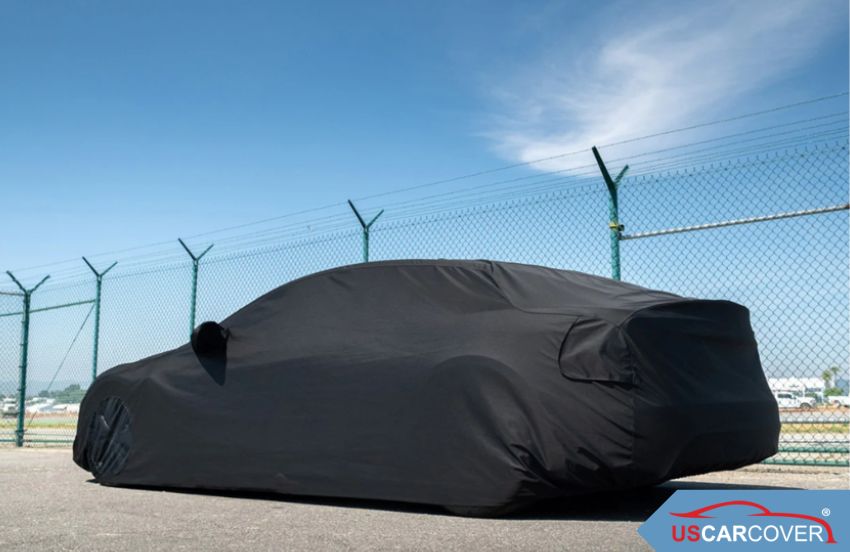
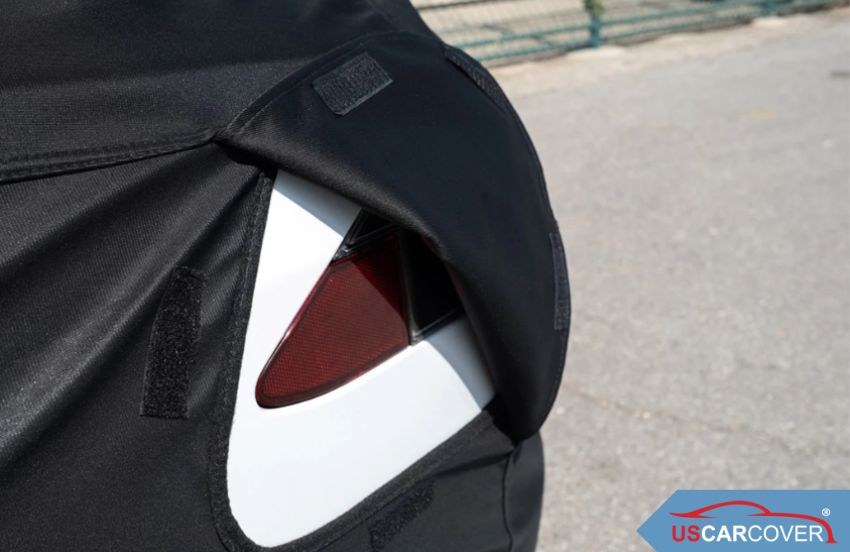
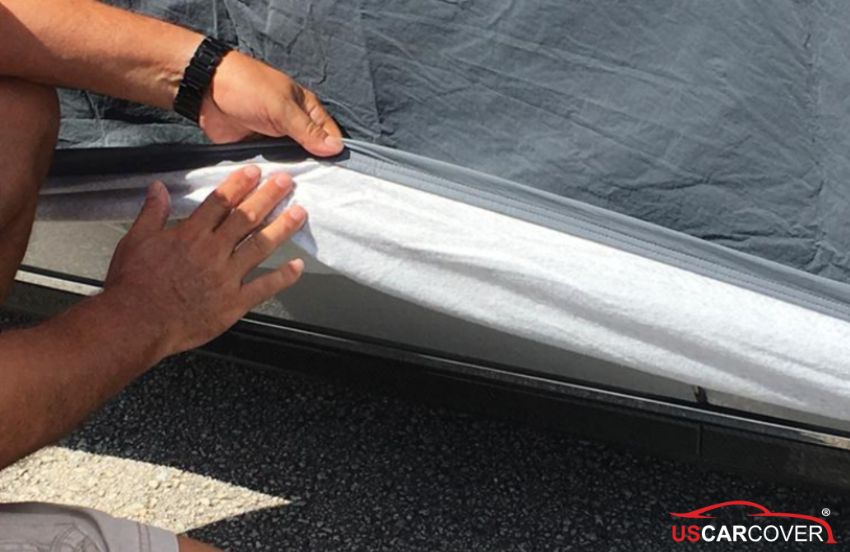
At US Car Cover, Tesla car cover is designed based on the real dimensions and shape of each model so the cover fits snugly, reduces loose fabric and minimizes flapping. Materials are selected to balance UV blocking, heat reduction and appropriate water resistance while allowing the car underneath to “breathe” so moisture is not trapped. The inner lining of Tesla car cover is soft and friendly to paint, glass and plastic trim.
When you contact US Car Cover, you can describe where you usually park, your local climate and how often you plan to use the cover. The team can then suggest the Tesla car cover that best fits your situation so you do not have to waste time and money testing multiple products. This is a practical way to reduce risk and save on long term costs.
