
Short answer: if your RV spends the winter outside, yes, cover it. If it sits in a heated building, a cover is nice to have but not essential. Most RV owners fall somewhere in between. They park beside the house, in a storage lot, or under a carport that keeps the roof dry and leaves the sides exposed. For them, the real question is how to cover it so the cover helps and doesn't cause new problems.
That last part matters. A badly chosen cover can do more harm over a winter than no cover at all. Here's how to think it through.
What a winter outside actually does to an RV
Most of the damage from winter happens on the roof and the seams. It's slow and you can't see it, which is why it gets expensive.
The roof and its sealant
An RV roof is a long run of seams: around the vents, the AC unit, the skylight, the antenna, the edges where the roof meets the sidewalls. Every one of them is held together by sealant. That sealant gets brittle with sun, then cracks when it freezes and thaws over and over. Water gets into a hairline crack, freezes, opens it a little wider, and the next thaw lets more in. By spring you may have a soft spot in the ceiling or a stain in the corner of the bedroom, and roof and wall repairs from hidden water damage are some of the most costly fixes an RV owner can face.
Sun, even in January
Winter sun is lower but it still does damage, and snow reflects it back up onto the sides. Fiberglass slowly goes chalky, decals crack and peel, and rubber roofs and window seals age faster. Tires take a hit too. A trailer that sits for five months with one side facing south can come out of winter with sidewalls that look a year older than the other side.
Snow sitting on top
Picture a travel trailer parked next to a house in western Michigan. A lake-effect band comes through overnight and drops a foot of wet, heavy snow. It sits for a week, melts a little in the afternoon sun and refreezes every night. Ice builds up along the roof edges and around the vents, right where the sealant is. That's the setup that leads to leaks.
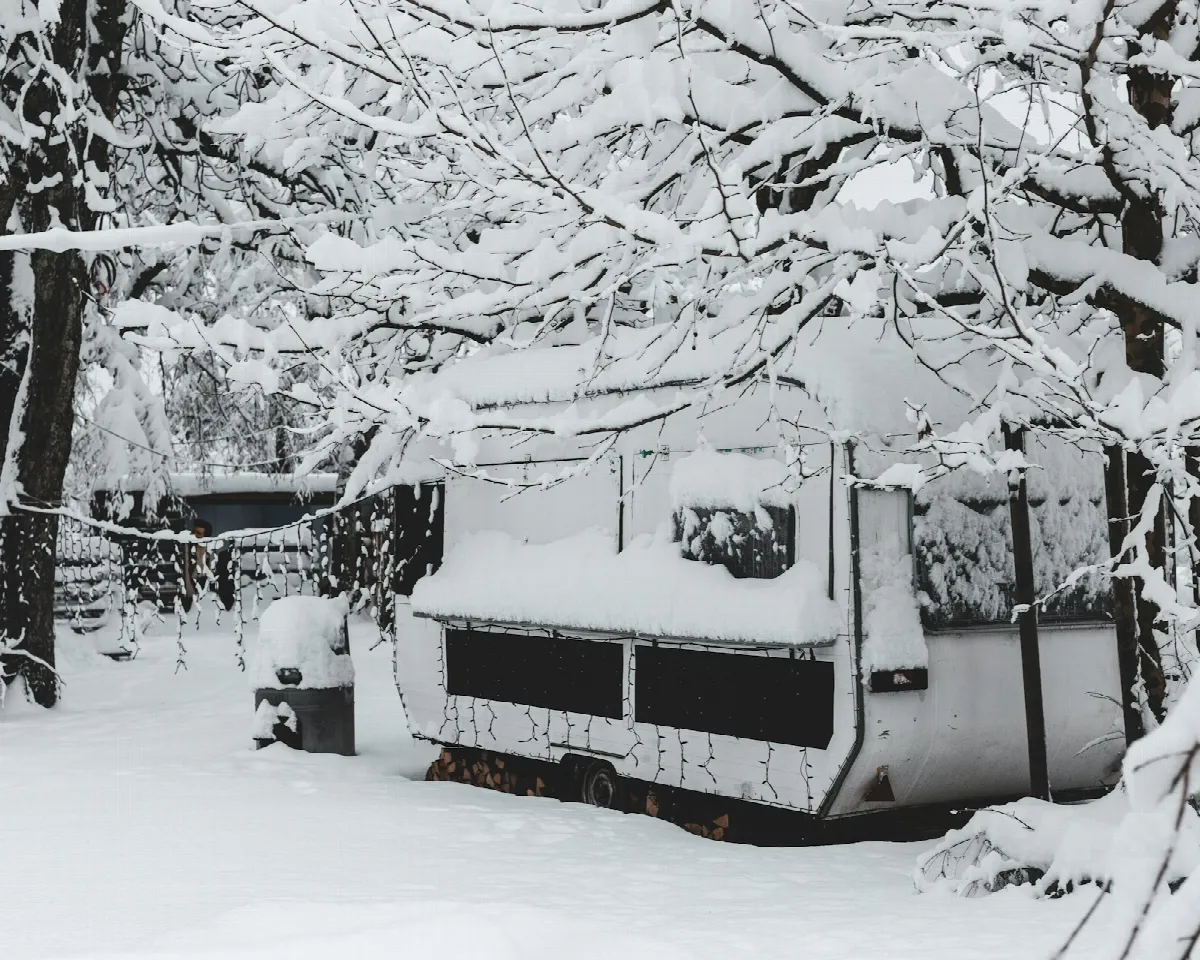
A cover won't hold up a heavy snow load for you. RV roofs aren't built for that, covered or not. What a cover does is keep the melt water off the seams and make the snow much easier to clear, because it slides off fabric far better than it comes off a textured roof.
When a cover makes things worse
This is the part most people find out the hard way.
The blue tarp
A tarp strapped down with bungee cords looks like a cheap fix. Over a winter, it usually turns into the problem. Tarps don't breathe, so condensation forms underneath and stays there against the roof and sidewalls. That's how mildew starts. Every gust of wind lifts the loose edges and slaps them back down, and those six months of flapping wear grooves into the fiberglass and the decals. Most tarps are in shreds by March anyway.
A cover that's too big
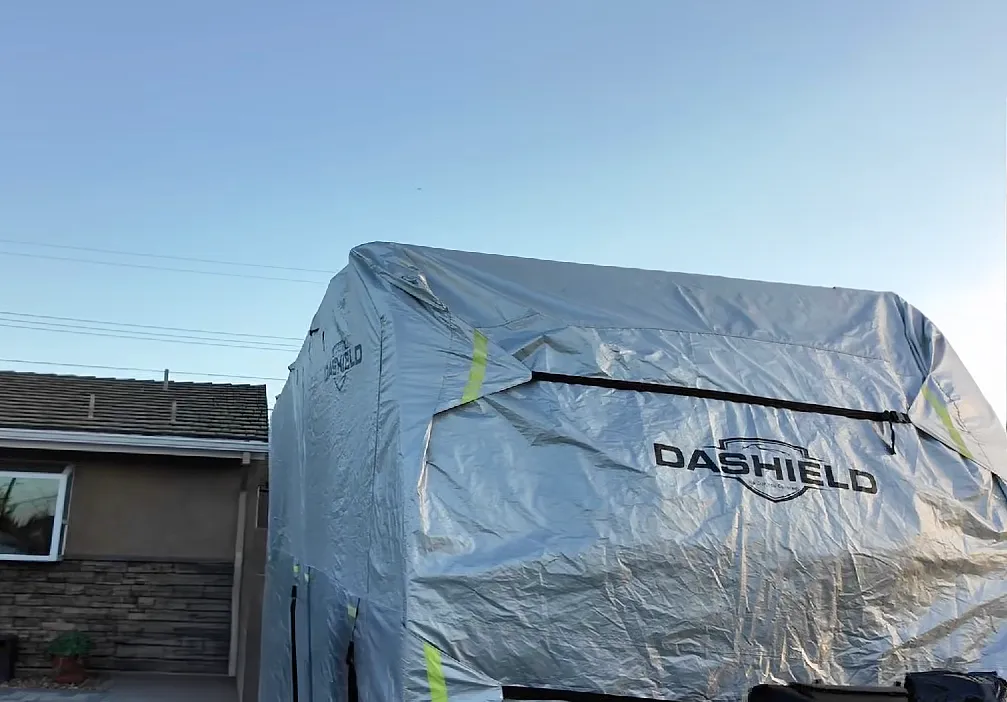
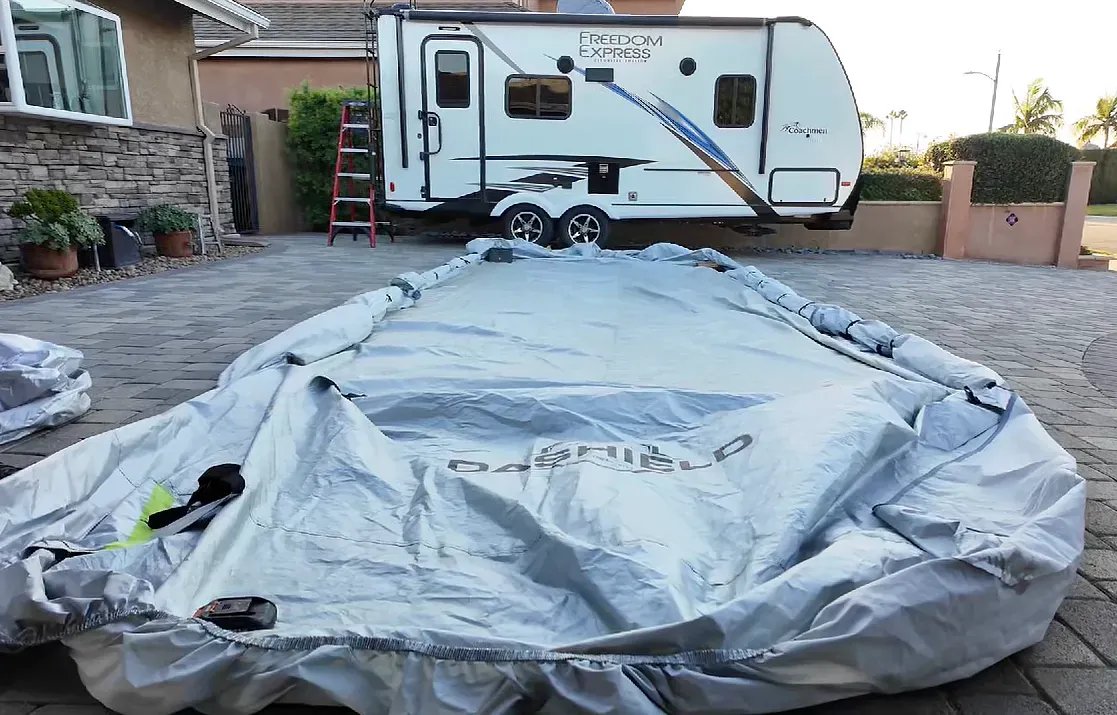
A cover that's several feet too long or too tall bunches up and catches the wind the same way a tarp does. On a gusty night in a storage lot on the Colorado Front Range, that loose fabric acts like a sail. A cover sized for your trailer's length, with straps that pull it in under the body, stays put through the gusts.
Sharp corners
Gutter ends, ladder brackets, the corners of the AC shroud and roof rails can wear a hole through almost any fabric once the wind starts moving it. Pad them before the cover goes on. Gutter guards and a ladder cover exist for exactly this reason.
Covering a wet RV
If the roof is wet or has snow on it when the cover goes on, you've just sealed moisture in. Wait for a dry day.
What to look for in a winter RV cover
Skip the marketing words on the box and ask four questions.
- Does it breathe? Moisture will get under any cover. A fabric that lets vapor out, plus a few vents near the top, keeps it from turning into condensation and mildew.
- Does it shed water from the top? The roof panel takes the snow and melt, so that's where the heaviest layers belong.
- Is it sized for your RV? Covers are sold by length range. Measure before you buy, not after: leave the tongue jack out of the length, include anything permanently attached at the ends like a rear ladder or spare tire, and if you land right at the edge of a range, go one size up.
- How does it stay down? Count the straps and check they go under the body, not just around the bottom edge.
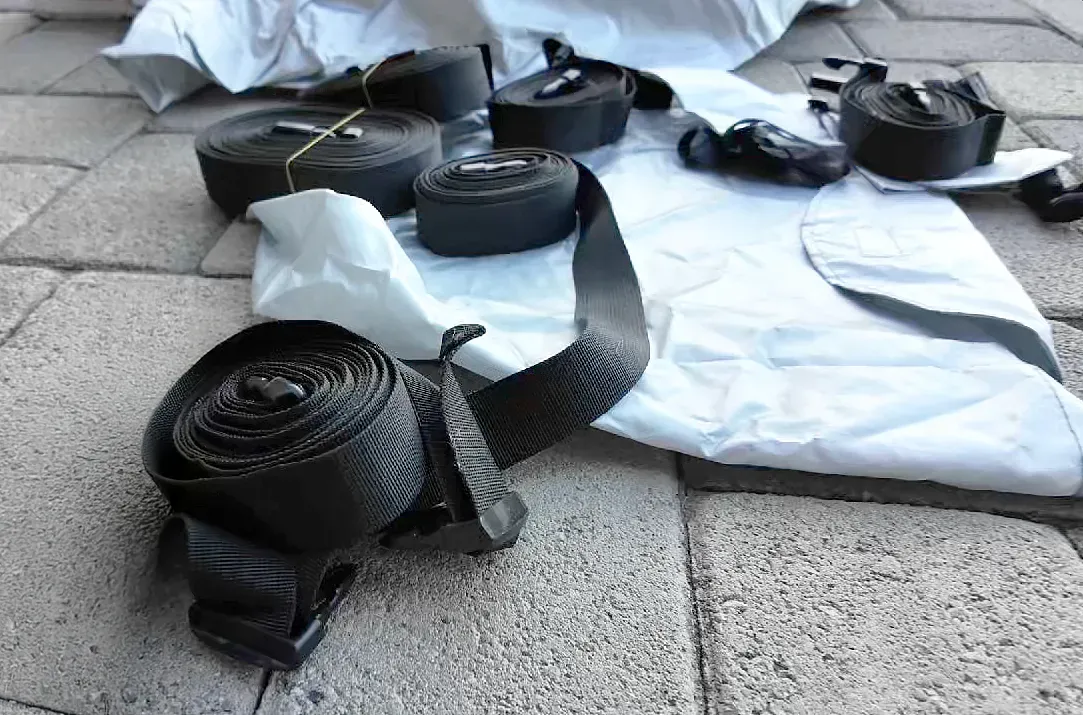
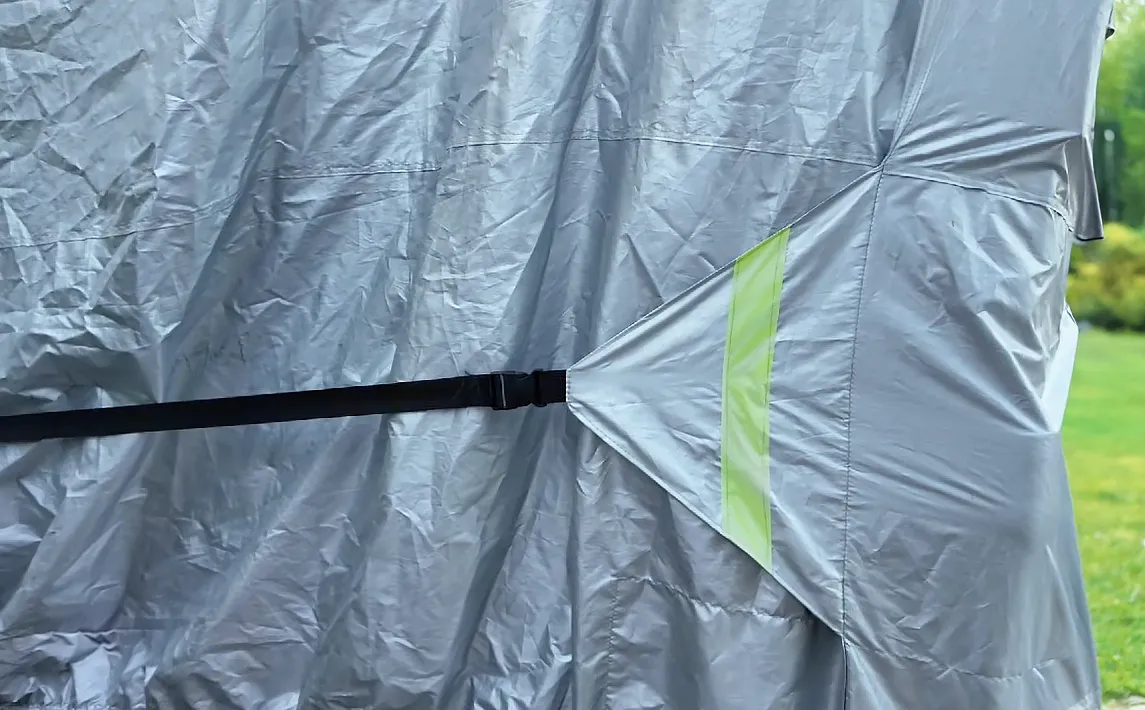
Our RV Cloud Liteweight Trailer Cover answers those questions this way. It's made for travel trailers from 13 to 40 feet long. It has a 6-vent system for airflow, 8 straps with buckles that run under the trailer, and elastic hems at the ends. The kit also includes 4 wheel covers, 6 gutter guards, a ladder cover, a hitch cover and a tongue jack cover, so the sharp corners and the tires are dealt with in the same box. The fabric is a lightweight 300D Oxford, which matters more than it sounds when you're the one dragging it over a 30-foot roof alone. See all options on our RV covers page.
How to put an RV cover on before winter
Do this once, on a calm, dry afternoon before the first real snow, and you won't have to think about it again until spring.
- Winterize first. Drain the water system, take care of the batteries and propane, prop the fridge door open, and set out moisture absorbers inside. The cover is the last step, not the first.
- Wash and dry the RV. Dirt under a cover acts like sandpaper when the wind moves the fabric.
- Check the roof sealant now. It's much easier to spot and fix a crack before the cover goes on than to find it in April.
- Pad the sharp points. Gutter guards on the gutter ends, the ladder cover over the ladder.
- Get the cover up. Many owners roll it up front to back and unroll it across the roof from the ladder. A second person on the ground makes this a lot easier. Our RV cover installation instructions walk through it step by step.
- Strap it down. Snug, not drum-tight. The cover should move a little with the RV, not strain against it in the cold.
- Cover the tires and the hitch. These are the parts that age fastest in the sun.
During the winter
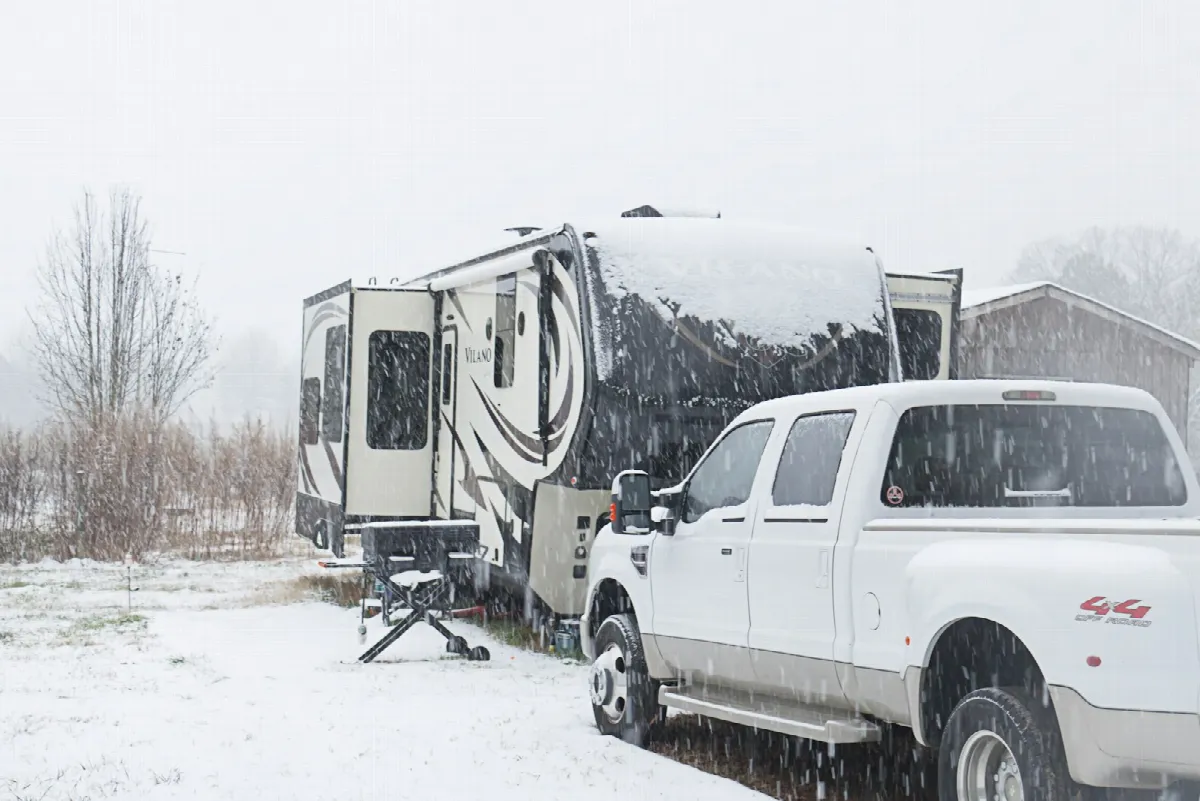
- After a heavy snow, clear what you can from the ground with a soft roof rake or a long-handled broom. Don't climb onto a covered roof. Fabric on top of snow and ice is slippery, and that's how people get hurt.
- After a windy week, walk around and check the straps.
- If a section of the cover freezes to the roof, leave it. Pulling it free in the cold can tear the fabric. Wait for a thaw.
What about indoor or carport storage?
Inside a heated building, a cover mostly keeps dust and bird droppings off. It's helpful, but you can live without it. A carport is different. The roof stays dry, but wind-driven snow and the low winter sun still reach the sides, and birds love the rafters. A cover is still worth it there, and the wind risk is lower, so it's an easy job.
FAQ: covering an RV in winter
Is a tarp good enough to cover an RV for winter?
Usually not. Tarps trap moisture underneath and flap in the wind, which can scuff the finish and lead to mildew. A breathable RV cover that's sized for your trailer and straps down underneath is a much safer choice.
Can a cover cause mold on an RV?
It can if the fabric doesn't breathe, if there are no vents, or if the RV was wet when you covered it. Use a breathable cover with vents, cover the RV on a dry day, and leave moisture absorbers inside.
Do I still need to clear snow off a covered RV?
Yes. A cover protects the roof seams from melt water but doesn't help the roof carry weight. Clear heavy snow from the ground with a roof rake or soft broom, and don't climb onto a covered roof.
Should I cover my RV tires in winter?
Yes, especially if the RV sits in one spot for months. Tire covers block the sun that dries out and cracks the sidewalls.
How do I know what size RV cover to buy?
Measure the length of your RV without the tongue jack, but include anything permanently attached at the ends, like a rear ladder or spare tire. Pick the cover range that includes that number, and if you are right at the limit of a range, size up. You can see the current length ranges on the RV Cloud Liteweight product page.
Parking the trailer for the season? Look up your length on the RV Cloud Liteweight Trailer Cover page. If you're also putting a car away until spring, our car winter storage checklist covers the rest.
